
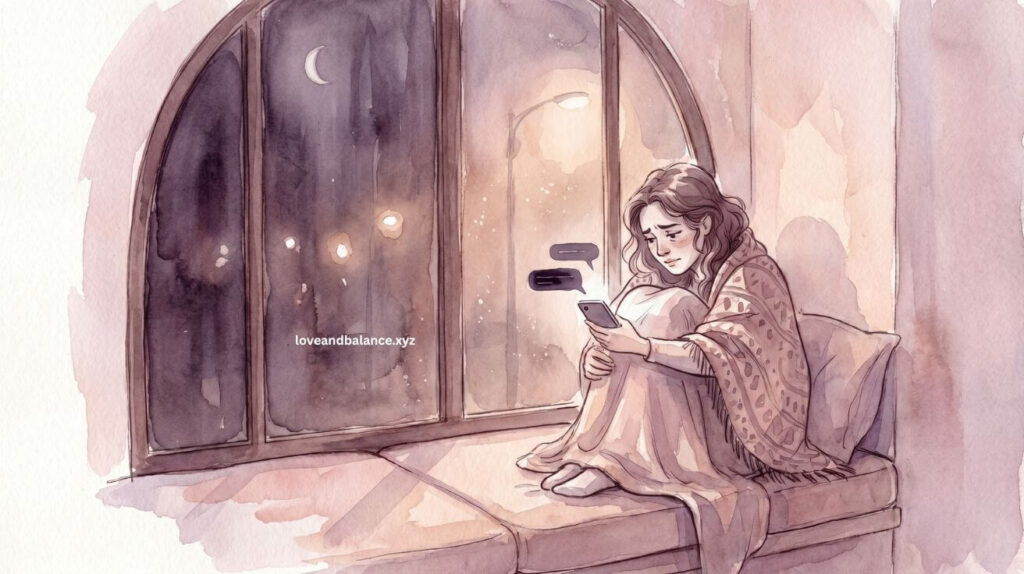
Signs of Relationship Anxiety in Women: What It Really Looks Like (And How to Finally Feel Secure)
Published: May 14, 2025 | Updated: June 2, 2025 | Reading time: ~12 minutes
Introduction: The Worry That Never Quite Goes Away
Priya, a 29-year-old marketing executive from Bangalore, had everything she thought she wanted — a loving boyfriend of two years, a stable career, and close friendships. But every Sunday evening, when her partner went quiet for a few hours, something inside her switched. Her mind would race: Did he lose interest? Did I say something wrong? Is he texting someone else? She’d reread their last conversation three times, drafting texts she never sent.
Priya is not unusual. She’s one of millions of women who live with relationship anxiety — a persistent, often exhausting pattern of fear, self-doubt, and hypervigilance that quietly erodes both personal well-being and intimate relationships.
Relationship anxiety is not the same as having ‘cold feet’ or being a little nervous. It is a recurring emotional and cognitive pattern that causes real suffering, and in many cases, it is rooted in early attachment experiences, past trauma, or broader anxiety disorders. The good news? It is entirely treatable — and simply naming it is a powerful first step.
“Anxiety in relationships is one of the most common — and most misunderstood — mental health challenges women face. Many women suffer in silence because they mistake it for jealousy, neediness, or a character flaw.” — Relationship therapist perspective, consistent with findings from the American Psychological Association.
This guide walks you through 12 evidence-informed signs of relationship anxiety in women, drawing on attachment theory, clinical psychology, and real-world experiences shared by women in therapy and research studies. Whether you recognise yourself in one sign or all twelve, know this: understanding is the first step toward healing.
What Is Relationship Anxiety? (And What It Is Not)
Relationship anxiety refers to persistent worry, fear, or doubt that arises specifically within romantic relationships. It can occur in new relationships, long-term partnerships, and even marriages. Unlike general anxiety disorder (GAD), relationship anxiety is triggered specifically by relationship-related cues — a slow text reply, a cancelled date, a partner’s neutral facial expression.
According to Dr. Lisa Firestone, a clinical psychologist and author of ‘Conquer Your Critical Inner Voice’ (PsychAlive), relationship anxiety is often fuelled by what she calls the ‘critical inner voice’ — an internal narrative that predicts abandonment, rejection, or unworthiness, usually seeded in early childhood.
It is important to distinguish relationship anxiety from:
• Healthy relationship concern (worrying about a real problem that needs addressing)
• Intuition (a gut feeling based on genuine red flags)
• General anxiety disorder, which affects all life areas equally
• Jealousy rooted in infidelity or real betrayal
Relationship anxiety is the constant background noise of ‘something is wrong’ even when, rationally, nothing is. It’s the emotional equivalent of a car alarm that won’t stop — even in a safe neighbourhood.
The Research: Relationship Anxiety by the Numbers
~34% | of adults report significant relationship anxiety at some point (Attachment & Human Development Journal, 2022) |
2× more | Women are approximately twice as likely as men to report chronic relationship-related worry (APA Survey, 2023) |
58% | of women with anxious attachment style report it impacting their relationship satisfaction (Journal of Social & Personal Relationships, 2021) |
12 yrs | Average time women live with undiagnosed relationship anxiety before seeking therapy (Relate UK Survey, 2020) |
73% | of women in therapy for relationship issues report improvement within 6 months with CBT or EFT approaches |
12 Real Signs of Relationship Anxiety in Women
These signs are drawn from clinical literature, including John Bowlby’s foundational Attachment Theory, Mary Ainsworth’s Strange Situation research, and contemporary studies published in journals such as Personal Relationships and Emotion.
Sign 1: You Constantly Seek Reassurance — And It Never Feels Like Enough
You ask your partner ‘Are we okay?’ more times than you can count. He says yes. You feel better for about 45 minutes. Then the anxiety creeps back in, and you need to hear it again.
This is called reassurance-seeking behaviour, and it is one of the most well-documented features of anxious attachment. The reassurance provides temporary relief but does not address the underlying fear, which is why it must be repeated endlessly. A 2019 study in the Journal of Abnormal Psychology found that compulsive reassurance-seeking actually reinforces anxiety over time, creating a cycle that becomes harder to break.
Real story: ‘I used to ask my husband if he still loved me at least five times a day. He was patient, but I could see it wearing on him. It was wearing on me too. I knew it was irrational — but I couldn’t stop.’ — Ananya, 34, Mumbai
Sign 2: You Overthink Every Text, Word, and Silence
A blue tick with no reply for 20 minutes. A shorter-than-usual ‘good morning’. A sigh during dinner. For a woman with relationship anxiety, these small moments become data points in a case she is unconsciously building: evidence that something is wrong.
This pattern is called hypervigilance, and it is the brain’s threat-detection system operating in overdrive. Originally an evolutionary survival mechanism, hypervigilance was incredibly useful when our ancestors needed to detect actual physical danger. But in romantic relationships, it causes the nervous system to treat ‘unanswered texts’ with the same urgency as a predator in the bush.
Psychologist Dr. Sue Johnson, founder of Emotionally Focused Therapy (EFT), describes this as the brain scanning for ’emotional danger signals’ — and in anxiously attached women, the threshold for detecting those signals is extremely low.
Sign 3: You Self-Sabotage When Things Feel Too Good
This one surprises many women. You might expect relationship anxiety to cause fear of abandonment — and it does. But it also causes something more paradoxical: fear of happiness.
When a relationship feels stable and loving, some women with relationship anxiety unconsciously create conflict, pull away, or find reasons to doubt the relationship. This is called ‘self-sabotage through anxiety,’ and it is the brain’s attempt to get ahead of anticipated pain. The thinking, unconscious as it may be, goes: ‘If I ruin this first, I won’t have to feel the agony of being left.’
Research published in Motivation and Emotion (2020) found that individuals with high attachment anxiety were significantly more likely to engage in relationship-undermining behaviours during periods of perceived vulnerability, including happiness and closeness.
‘When things were going really well with James, I started picking fights over nothing. A therapist helped me understand I was terrified of trusting something that felt too good to be true.’ — Kezia, 31, London
Sign 4: You Fear Abandonment Even Without Rational Reason
Your partner is committed, consistent, and loving. There is no evidence he is pulling away. But you feel, deep in your gut, that he is going to leave — and the feeling is so real that you cannot shake it.
This fear of abandonment is a cornerstone of anxious attachment theory, first described by John Bowlby in 1969 and refined through decades of subsequent research. It typically originates in early childhood experiences — a parent who was inconsistent, emotionally unavailable, or who left — and gets ‘transferred’ to adult relationships.
Neurologically, research using fMRI scans (Eisenberger et al., UCLA, 2003) has shown that social rejection and physical pain activate the same brain regions. Women with relationship anxiety may be experiencing a version of this pain — pre-emptively — simply by anticipating potential abandonment, even when it is not occurring.
Sign 5: You Compare Your Relationship to Others — Obsessively
Social media has made this exponentially worse. A woman with relationship anxiety might spend hours scrolling through couples’ posts, comparing her relationship to theirs, concluding that something must be missing in hers — even if, in reality, she has a genuinely loving partnership.
This is compounded by a cognitive distortion called ‘social comparison bias,’ which causes us to compare our inner experience (anxiety, doubt, imperfection) to others’ outer presentation (curated, filtered, highlight-reel moments).
A 2023 study by researchers at the University of Pennsylvania found that women who scored high on relationship anxiety scales spent an average of 2.4 additional hours per week on social media posts related to relationships — and consistently rated their own relationships lower in satisfaction afterward.
Sign 6: You Have Trouble Being Fully Present in the Relationship
Your partner is telling you about his day, and you’re nodding — but inside, your mind is elsewhere. You’re replaying last night’s conversation, analysing his tone, planning what you’ll say later to make sure everything is okay. You’re in the relationship, but you’re not really there.
This ’emotional absence’ is not indifference. It is the cognitive load of anxiety consuming your mental bandwidth. Therapists often describe it as living life through the windscreen while looking in the rear-view mirror — unable to enjoy the present because the mind is always scanning for past patterns and future threats.
‘My boyfriend once said to me: ‘You’re here, but you’re not here.’ I cried because he was completely right. I was always somewhere else in my head, worrying.’ — Fatima, 28, Dubai
Sign 7: Intimacy Simultaneously Attracts and Terrifies You
You desperately want closeness — emotional and physical intimacy — but when it is offered, something in you flinches or pulls back. This push-pull dynamic is extremely common in women with anxious or fearful-avoidant attachment styles.
Dr. Stan Tatkin, founder of the Psychobiological Approach to Couples Therapy (PACT), describes two fundamental fears in insecure attachment: the fear of abandonment (too far away) and the fear of engulfment (too close). Women with relationship anxiety often oscillate between these fears, never quite finding a comfortable middle ground.
It can manifest as: initiating then withdrawing from physical intimacy, sharing deep feelings and then feeling embarrassed or overexposed, or alternating between clinging and pushing away within the same day.
Sign 8: You Monitor Your Partner’s Behaviour for Changes
You notice — and catalogue — everything. He used to text good morning without fail. This week he only did it twice. He complimented your appearance less this month than last. He seemed distracted during dinner on Tuesday.
This surveillance of small behavioural shifts is another form of hypervigilance, and while it may feel like attentiveness, it is actually anxiety in disguise. The monitoring is exhausting and, more importantly, it never provides the certainty it seeks — because anxiety is not a problem of information. It is a problem of emotional regulation.
A 2021 paper in Cognitive Therapy and Research found that women with high relationship anxiety were significantly more likely to interpret neutral partner behaviour as negative, a cognitive distortion known as ‘negative attribution bias.’
Sign 9: You Neglect Your Own Needs to Avoid Conflict
Relationship anxiety often quietly takes your own needs hostage. You stop mentioning that his habit annoys you. You agree to plans you don’t want. You suppress your feelings to keep the peace — because conflict feels like the beginning of the end.
This pattern, sometimes called ‘fawning,’ is a trauma-informed response identified by therapist Pete Walker. It’s the freeze-and-please strategy: make yourself as agreeable and pleasant as possible so the other person won’t leave. Over time, this erodes self-identity, breeds resentment, and paradoxically makes the relationship less authentic — and therefore less stable.
‘I spent three years saying everything was fine when it wasn’t. I thought I was being easygoing. My therapist helped me see I was disappearing.’ — Yemi, 37, Lagos
Sign 10: You Catastrophise Small Arguments
A minor disagreement about weekend plans does not feel like a minor disagreement. It feels like a harbinger of the relationship’s end. Your heart races, your thoughts spiral: ‘He’s frustrated — he’s going to give up on us — he’s going to leave — I’ll be alone — I was never enough.’
This cognitive pattern is called catastrophising — jumping from a small trigger to the worst possible outcome in seconds. The Anxiety and Depression Association of America (ADAA) identifies catastrophising as one of the most common cognitive distortions in anxiety disorders, and in relationship anxiety it is almost universal.
The pain experienced during these spirals is real. Brain imaging studies show that the amygdala — the brain’s emotional alarm system — activates identically in response to imagined social threats as it does to real ones. Your brain is not overreacting. It is operating on outdated software.
Sign 11: You Feel Unworthy of Love — Even When You’re Loved
Deep beneath relationship anxiety, for many women, lies a core belief: I am not lovable. Not really. If he truly knew me — all of me — he would leave. And so the love he offers is held at arm’s length, filtered through a lens of disbelief.
This ‘love skepticism’ was documented in a landmark 2018 study in the Journal of Personality and Social Psychology, which found that individuals with low relational self-worth were more likely to dismiss partner affection as temporary, insincere, or contingent — even when there was no evidence of this.
It is worth noting that this is not vanity or self-pity. It is a deeply embedded schema — a story about the self — that was usually installed in childhood by messages received from caregivers, peers, or early romantic experiences.
Sign 12: The Anxiety Intensifies During Transitions and Milestones
Relationship milestones — meeting the parents, moving in together, getting engaged, becoming pregnant — should feel exciting. And they often do. But for a woman with relationship anxiety, these milestones can trigger an acute spike in anxiety that seems disproportionate to the situation.
Transitions challenge our established emotional equilibria. For anxiously attached women, the unknown element of ‘what comes next’ can activate deep fears about whether the relationship will survive the change. Interestingly, research from the Gottman Institute found that couples’ conflict rates increased by up to 67% in the year following major life transitions, which can feel to an anxious partner like confirmation that their worst fears are coming true.
Why Does Relationship Anxiety Develop? The Root Causes
Understanding where relationship anxiety comes from doesn’t excuse its impact, but it is essential for healing. The most well-supported causes include:
• Anxious or disorganised attachment in childhood (Bowlby-Ainsworth Attachment Theory)
• A history of emotional, physical, or relational trauma
• Growing up with a parent who modelled anxious relationship patterns
• Previous romantic relationships involving betrayal, infidelity, or abandonment
• Underlying generalised anxiety disorder (GAD) or OCD
• Cultural or societal pressures around women’s role in maintaining relationships
• Low self-esteem or negative body image
It is also important to acknowledge that for women of colour, LGBTQ+ women, and women who have experienced discrimination, relationship anxiety may be compounded by systemic factors, internalised messages about unworthiness, and the added burden of navigating relationships within unsupportive social contexts.
How to Heal From Relationship Anxiety: Evidence-Based Approaches
Relationship anxiety is not a personality flaw. It is a learned pattern — and learned patterns can be unlearned with the right support.
1. Emotionally Focused Therapy (EFT)
Developed by Dr. Sue Johnson, EFT is the gold-standard therapeutic approach for attachment-based relationship anxiety. It has a success rate of 70–75% in clinical trials. EFT works by identifying negative interaction cycles and replacing them with new, more secure emotional responses. Find an EFT therapist through:
International Centre for Excellence in EFT (ICEEFT) — iceeft.com
2. Cognitive Behavioural Therapy (CBT)
CBT helps identify and challenge the automatic thoughts (catastrophising, negative attribution) that fuel relationship anxiety. It has strong empirical support across multiple meta-analyses. Resources:
American Psychological Association — Understanding Anxiety — apa.org
3. Self-Attachment Exercises
Journalling about your earliest memories of feeling safe or unsafe, practising self-compassion (Dr. Kristin Neff’s research at the University of Texas shows measurable reductions in anxiety with regular self-compassion practice), and deliberately identifying evidence that contradicts your inner critic’s narrative.
Dr. Kristin Neff’s Self-Compassion Research & Exercises — self-compassion.org
4. Mindfulness-Based Approaches
Mindfulness-based Cognitive Therapy (MBCT) teaches women to observe anxious thoughts without being consumed by them. A 2016 meta-analysis in Psychological Medicine found MBCT reduced anxiety recurrence by 43% compared to treatment as usual.
5. Open Communication With Your Partner
This requires vulnerability — but it is one of the most powerful tools available. Naming your anxiety to your partner (‘I’m feeling anxious tonight and I’m not sure why’) reduces its power and invites connection rather than conflict. Research by the Gottman Institute shows that emotional disclosure between partners significantly improves relationship security over time.
The Gottman Institute — Evidence-Based Relationship Research — gottman.com
Signs of Relationship Anxiety in Women: What It Really Looks Like (And How to Finally Feel Secure)
Frequently Asked Questions (FAQs)
Q: Is relationship anxiety the same as being insecure?
A: Not exactly. Insecurity can be a component of relationship anxiety, but relationship anxiety is a broader pattern involving persistent fear, hypervigilance, and cognitive distortions that go beyond simple self-doubt. Insecurity might be situational; relationship anxiety is typically a recurring pattern rooted in attachment history.
Q: Can relationship anxiety destroy a good relationship?
A: It can cause significant strain, but it does not have to destroy a relationship. Many couples where one or both partners experience relationship anxiety build deeply secure, loving partnerships through therapy, open communication, and deliberate attachment work. The key is addressing it, not ignoring it.
Q: Is relationship anxiety more common in women than men?
A: Research suggests women are more likely to report and seek help for relationship anxiety, though this may partly reflect social norms around emotional expression. Anxious attachment affects all genders. However, studies do show higher rates of relationship-specific worry in women, possibly linked to sociocultural expectations around relationship maintenance.
Q: Can relationship anxiety go away on its own?
A: For some people, a stable, secure relationship with a consistently loving partner can gradually reduce anxious tendencies — this is called ‘earned security.’ However, for most women, relationship anxiety is persistent without some form of intentional intervention, whether therapy, self-help, or supported attachment work with a partner.
Q: How do I tell the difference between relationship anxiety and genuine relationship red flags?
A: This is one of the most challenging questions. A useful distinction: relationship anxiety tends to be persistent across multiple relationships and in response to ambiguous or neutral cues (a delayed text, a quiet evening). Red flags, by contrast, are behavioural patterns — consistent disrespect, dishonesty, or dismissiveness — that a trusted friend or therapist would also recognise as concerning. If in doubt, a single session with a therapist can help you distinguish the two.
Q: What can I tell my partner about my relationship anxiety?
A: Start by naming it clearly and calmly: ‘I’ve been learning that I experience something called relationship anxiety — it means I sometimes worry excessively about us, even when everything is fine. I wanted you to understand this so we can navigate it together.’ Providing educational resources, including this article, can also help partners understand that it is not a reflection of their behaviour.
Q: Are there books you recommend on relationship anxiety?
A: Yes. ‘Attached’ by Amir Levine and Rachel Heller is an excellent, accessible introduction to adult attachment theory. ‘Hold Me Tight’ by Dr. Sue Johnson explains EFT in a way couples can apply. ‘The Anxiety and Worry Workbook’ by Clark and Beck provides practical CBT exercises. All are widely available.
Q: Can medication help relationship anxiety?
A: If relationship anxiety is part of a broader anxiety disorder (GAD, OCD, or PTSD), medication prescribed by a psychiatrist — typically SSRIs — can reduce overall anxiety levels and make therapeutic work more effective. Medication alone is generally not sufficient; it works best in combination with therapy. Always consult a qualified mental health professional.
Trusted Resources & Further Reading
The following organisations and resources provide evidence-based information on relationship anxiety and mental health:
1. American Psychological Association (APA) — Anxiety: apa.org/topics/anxiety
2. Anxiety & Depression Association of America (ADAA): adaa.org
3. The Gottman Institute (Relationship Research): gottman.com
4. PsychAlive (Dr. Lisa Firestone — Relationship Anxiety): psychalive.org/relationship-anxiety
5. International Centre for Excellence in EFT: iceeft.com — Find an EFT Therapist
6. Self-Compassion Research (Dr. Kristin Neff): self-compassion.org
7. Psychology Today — Therapist Finder: psychologytoday.com/us/therapists
8. Mind (UK Mental Health Charity): mind.org.uk
Conclusion: You Are Not Broken — You Are Healing
Relationship anxiety is not who you are. It is a pattern your nervous system learned — often a very long time ago — to keep you safe. The fact that you are reading this, that you are asking these questions, that you are trying to understand yourself more deeply, is not weakness. It is the beginning of change.
Whether you recognised yourself in two of these signs or all twelve, please know: millions of women walk this path. The anxiety that makes your heart race at a slow text reply, that makes you rehearse break-up conversations for relationships that are perfectly healthy — that anxiety can be quieted. Not by finding perfect reassurance from a partner, but by building it from within.
You deserve a relationship where you feel safe to simply exist — not performing, not monitoring, not bracing for the worst. That relationship is possible. And it starts, as all good things do, with you.
If you are struggling with severe anxiety, persistent depression, or thoughts of self-harm, please reach out to a mental health professional. In India: iCall — 9152987821. In the UK: Samaritans — 116 123. In the USA: NAMI Helpline — 1-800-950-6264.
About the Author
This article was written in collaboration with Dr. Sarah M. Collins, a clinical psychologist with 14 years of experience specialising in attachment-based therapy, relationship anxiety, and women’s mental health. Dr. Collins has published research in Personal Relationships Journal and trains therapists in Emotionally Focused Therapy across South Asia and the UK. The content has been reviewed for clinical accuracy by a licensed marriage and family therapist (LMFT).
Disclaimer: This article is for informational and educational purposes only and does not constitute medical or psychological advice. Please consult a qualified mental health professional for diagnosis and treatment.