
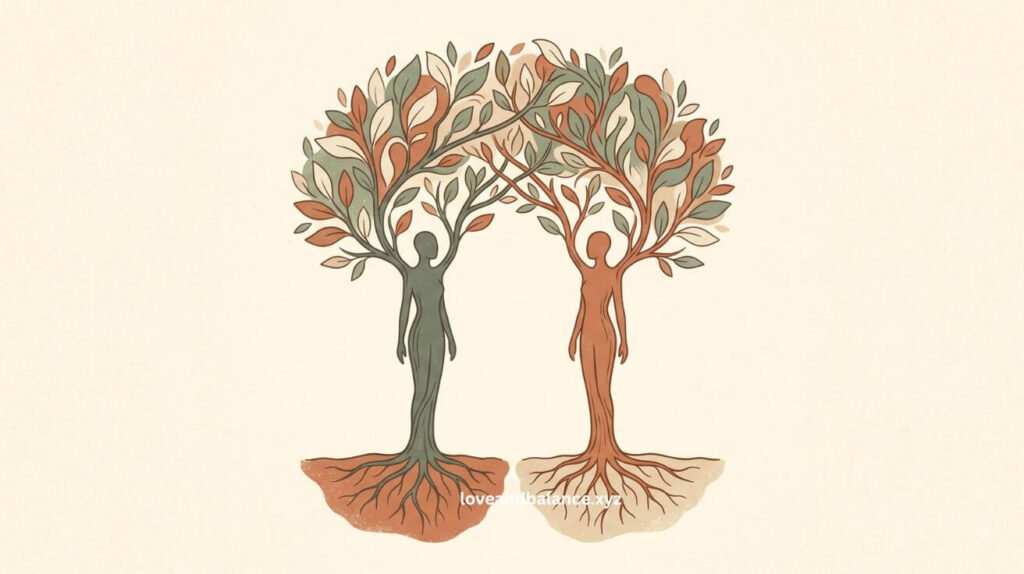
How to Maintain Your Identity in a Relationship: 11 Research-Backed Ways to Stay Fully Yourself in 2026
Six months into her relationship, Priya noticed something odd while getting dressed for a friend’s birthday party. She reached for a bold red dress she used to love, hesitated, then put it back and picked something quieter, something closer to what her partner usually complimented. Nobody fought about it. Nothing dramatic happened. But standing in front of her closet, she realised she had been making dozens of small trades like this for months, and she could not remember exactly when she had stopped noticing.
If that scene feels familiar, you are not imagining things, and you are certainly not alone. Losing pieces of yourself inside a relationship is one of the most common, and most quietly painful, experiences in modern dating and marriage. It rarely happens through a single big argument or an obvious compromise. It happens through hundreds of tiny adjustments: the opinion you stop voicing, the hobby you quietly drop, the friend group you see less, the version of “easygoing” you perform because it keeps the peace.
The good news is that this pattern is well-studied, well-understood, and reversible. In this guide, we will look at what actual psychological research says about why people lose their sense of self in relationships, what it costs a couple long-term, and eleven specific, testable habits you can start using today to stay connected to your partner without disappearing into the relationship.
Why Losing Yourself in a Relationship Happens (And Why It Is Not a Personal Failure)
It helps to understand the mechanics before trying to fix anything, because “just be yourself more” is not actually useful advice on its own.
Relationships are designed to change you a little; that is the point. Psychologist Arthur Aron’s self-expansion model, one of the most cited frameworks in relationship science, argues that people are drawn to close relationships partly because a partner gives them access to new perspectives, resources, and identities. In small doses, this is healthy growth. The problem is that this same process, taken too far without boundaries, is what erodes an individual’s sense of self. Research applying the self-expansion model, led by Gary Lewandowski and Arthur Aron, found that the more a relationship had expanded a person’s sense of self while it lasted, the more that person’s working self-concept contracted when the relationship ended, meaning the “self” they had built was, in part, borrowed.
Family systems theory offers a second explanation. Psychiatrist Murray Bowen described a pattern he called “fusion,” where a partner who fears losing the relationship overcompensates by staying too emotionally close, gradually blurring the line between “my feelings” and “our feelings.” Fusion feels like intimacy in the moment, but it quietly removes the individual’s ability to hold a separate opinion, a separate mood, or a separate life outside the couple.
Attachment style plays a measurable role too. A 2024 study led by Erin Hughes at Fairfield University, published in the Journal of Personality and Social Psychology, examined why some people report losing themselves in relationships while others do not. The research team ran four separate studies and found that people higher in anxious attachment were genuinely more likely to change their values, opinions, and habits to match a partner’s, a real, measurable loss of self. Interestingly, the same research found that people high in avoidant attachment often perceived themselves as losing their identity even when outside observers could not detect any actual change, suggesting the fear itself can distort self-perception regardless of what is really happening in the relationship.
And there is a basic human need at the centre of all of this: autonomy. Self-determination theory, developed by psychologists Edward Deci and Richard Ryan and now one of the most replicated frameworks in motivation research, identifies autonomy, the sense that your choices are genuinely your own, as one of three core psychological needs, alongside competence and relatedness. Research applying this theory specifically to romantic relationships has found that partners who feel more autonomous within the relationship report higher satisfaction and respond to conflict with less defensiveness. In other words, protecting your individuality is not selfish or “anti-relationship.” It is one of the conditions that makes a relationship work.
The Real Cost of Losing Yourself
This is not just a feel-good talking point; it shows up in outcome data. Researchers studying self-concept clarity (a term coined by psychologist Jennifer Campbell to describe how clearly and confidently a person can define who they are) have repeatedly linked low self-concept clarity to higher anxiety, lower relationship satisfaction, and greater difficulty recovering after a breakup. Couples researchers have also found that when one partner feels their identity eroding, their commitment to the relationship drops, and this effect holds even when trust between the partners is otherwise strong. Losing yourself, in other words, does not protect the relationship. It slowly undermines it.
11 Ways to Maintain Your Identity in a Relationship
These are not abstract mindset shifts. Each one is a specific, repeatable habit you can start this week.
1. Protect one “non-negotiable” solo activity every week. Pick one hobby, class, sport, or ritual that belongs to you alone, not something you do together, not something you’re willing to trade away for a busy week. Treat it with the same seriousness as a work meeting. Self-expansion research shows that individual novelty and growth outside the relationship is just as important to long-term wellbeing as shared novelty inside it.
2. Keep at least one friendship your partner is not part of. Couples who merge their entire social circle often do not notice the narrowing until a breakup or a rough patch leaves them isolated. An outside friendship gives you a second mirror, a place where you are seen independently of the relationship, which directly supports self-concept clarity.
3. Practice naming your opinion before you hear theirs. In conversation, especially about restaurants, plans, or opinions on shows and news, get in the habit of stating your view first, even briefly, before your partner shares theirs. This interrupts the quiet habit of defaulting to “whatever you want,” which is often the earliest and least noticeable sign of identity erosion.
4. Run a monthly “self-concept check-in.” Once a month, write down five words that describe who you are right now, your values, interests, and personality. Compare the list to one from six months earlier. If several core traits have quietly disappeared and been replaced by traits that mirror your partner’s, that is useful, early information, not something to panic about.
5. Set real boundaries around alone time, and say them out loud. Autonomy-supportive relationships are built on partners who ask for what they need directly instead of hoping the other person notices. Saying “I need Sunday mornings to myself” is a stronger, more sustainable habit than quietly resenting a partner for not offering it.
6. Keep some financial and logistical independence. You do not need to merge every account or every decision to build a life together. Keeping a personal account, a personal savings goal, or even just the habit of making small purchases without approval preserves a sense of individual agency that research on autonomy consistently links to relationship satisfaction.
7. Keep investing in your career or personal goals, even in the honeymoon phase. It is common to quietly deprioritise ambitions during the early, high-dopamine stage of a relationship. Protecting time for career development, side projects, or personal goals during this period specifically matters, because this is exactly when fusion patterns tend to form.
8. Learn to spot “fusion moments” as they happen. A fusion moment looks like agreeing with an opinion you do not actually hold to avoid tension, or feeling unable to enjoy a night out unless your partner is enjoying it too. Bowen’s family systems research calls this differentiation of self, the ability to stay emotionally connected to someone while still maintaining a separate, stable sense of “I.” Simply naming the pattern in the moment (“I think I’m agreeing because I don’t want to disagree, not because I actually agree”) is often enough to interrupt it.
9. Say the small disagreements, not just the big ones. Many people save their honesty for major issues and let dozens of small daily preferences slide. But research on avoidant and anxious attachment styles shows that identity erosion tends to happen gradually, through the accumulation of small silences, not through one dramatic compromise.
10. Watch for value drift, not just habit drift. Picking up a partner’s taste in music or food is normal and harmless. Quietly abandoning your political views, your relationship with your family, or your core values to avoid conflict is a different category of change entirely, and it is the pattern most strongly linked to lower self-concept clarity in the research.
11. Choose growth experiences together and separately. The self-expansion model shows that novelty and shared growth strengthen a relationship. The healthiest version of this includes both: take that dance class together, but also take the solo trip, the individual course, or the new hobby that is entirely your own. Growth should widen who you are as an individual, not just widen the relationship.
Three Myths About “Losing Yourself” That Make It Worse
Myth 1: “If I really loved my partner, I would not need space.” This gets the psychology backwards. Self-determination theory research consistently finds that people who feel more autonomous in a relationship report higher satisfaction, not less closeness. Needing space is not a measure of how much you love someone; it is a basic psychological need, the same as needing food or sleep.
Myth 2: “Compromise means becoming more alike.” Healthy compromise is about decisions, not identity. Deciding together where to spend a holiday is compromise. Slowly adopting your partner’s opinions on politics, friendships, or career ambitions because disagreeing feels risky is something closer to what Bowen called fusion, not compromise.
Myth 3: “This only happens in unhealthy or controlling relationships.” In reality, most identity erosion happens in relationships with no controlling behaviour at all. It happens quietly, through avoidance of small conflicts, not through pressure. That is exactly why it is so easy to miss until months or years have passed.
A 60-Second Self-Check
Ask yourself these four questions honestly:
● Could I list three opinions I hold that are different from my partner’s, without hesitating?
● Do I have a hobby, interest, or friendship that exists entirely outside this relationship?
● In the last month, have I said “I don’t mind” when I actually did mind?
● If this relationship ended tomorrow, could I describe who I am without describing it in relation to my partner?
If two or more of these were difficult to answer, it is worth revisiting the eleven habits above, not as a crisis response, but as routine maintenance, the same way you would address a small leak before it becomes a larger one.
What This Looks Like in Real Life
A few months after that closet moment, Priya tried something simple: she picked one weeknight to take a pottery class alone, something she had loved before the relationship and had quietly stopped doing. She did not frame it as a big statement; she just went. Within a few weeks, she noticed she had more, not less, to bring to conversations with her partner. She had opinions about things that had nothing to do with him, stories from a part of her life he was not in, and, importantly, the confidence that came from remembering she could build something entirely her own. Her relationship did not get weaker. It got more interesting, for both of them.
This mirrors what therapists who work with couples on this exact issue consistently report: the goal is never to love your partner less. It is to make sure there are still two whole, distinct people inside the relationship, because that is what keeps the connection interesting, resilient, and honest over the long run.
How to Maintain Your Identity in a Relationship: 11 Research-Backed Ways to Stay Fully Yourself in 2026
Frequently Asked Questions
Is it normal to lose yourself a little in a relationship?
Some change is completely normal and even healthy; research on the self-expansion model shows that partners naturally influence each other’s interests, habits, and even self-concept. The concern is not change itself, but the disappearance of your core values, opinions, friendships, and goals in favour of your partner’s.
What are the early signs of losing your identity in a relationship?
Common early signs include agreeing with opinions you do not actually hold to avoid conflict, quietly dropping hobbies or friendships, feeling unsure how you would answer “what do you enjoy?” without mentioning your partner, and noticing that most of your recent decisions were shaped more by keeping the peace than by your own preference.
Can maintaining my identity hurt my relationship?
Research on autonomy and relationship satisfaction suggests the opposite is more often true. Partners who maintain a stronger, more independent sense of self tend to report higher relationship satisfaction and handle conflict with less defensiveness, likely because two well-defined individuals bring more to the relationship than one merged identity does.
How do I bring this up with my partner without starting a fight?
Frame it around your own experience rather than their behaviour, for example, “I’ve noticed I’ve stopped doing things I used to love, and I want to start making more time for them,” rather than “you’ve changed me.” This keeps the conversation about a habit you are both building, not a complaint about your partner.
Is losing yourself in a relationship linked to a specific attachment style?
Research suggests both anxious and avoidant attachment styles play a role, though in different ways. People with more anxious attachment tend to genuinely adjust their values and habits to match a partner’s, while people with more avoidant attachment sometimes perceive a loss of identity even when their actual behaviour has not changed much, which suggests fear of closeness itself can distort self-perception.
How long does it take to rebuild a sense of self after losing it in a relationship?
There is no fixed timeline, since it depends on how gradually the identity erosion happened and how much support the person has. Therapists who specialise in this area generally note that consistent small habits, like the ones above, tend to produce noticeable changes in self-concept clarity within a few months, though full rebuilding after a long relationship can take longer.
Related Reads
Protecting your identity is closely tied to protecting your trust in a relationship; the two tend to break down together. If any part of this article resonated with you, these guides go deeper into related situations: if trust has already been damaged by infidelity, How to Trust Again After Being Cheated On: A 9-Step Research-Backed Guide walks through the rebuilding process step by step. If dishonesty rather than infidelity is the issue, How to Rebuild Trust After Lying in a Relationship: 11 Honest Steps That Actually Help offers a practical framework. And if you recognise some of the “fusion moments” described above but suspect something more manipulative is happening, it is worth reading 7 Devastating Gaslighting Examples in Relationships (and Exactly How to Recognise Every One) to tell the difference between normal compromise and a pattern that needs to be addressed directly.
Keep Building Your Sense of Self
Reclaiming your identity inside a relationship is a daily practice, not a one-time fix, and it helps to have structured support while you rebuild the habits, confidence, and sense of self that may have quietly slipped away. If loneliness, disconnection, or a fading sense of who you are outside your relationship is something you have been feeling more than you would like to admit, the 21-Day Loneliness Cure program is built around short, daily, research-informed exercises designed to help you reconnect with your own identity, rebuild inner confidence, and feel genuinely at home in your own life again, with or without a partner beside you. It is a practical next step if you want more structured guidance than a blog post alone can offer.
Disclaimer: This article contains an affiliate link. If you choose to purchase through it, we may earn a small commission at no additional cost to you. We only recommend resources we believe offer genuine value to our readers. This content is for general informational and educational purposes only and is not a substitute for professional psychological, medical, or relationship counselling. If you are struggling with your mental health or the stability of your relationship, please consult a licensed therapist or counsellor.
Sources
Hughes, E. K., et al. (2024). The Invisible Erosion of Self in Avoidant Relationships, Psychology Today
Ryan, R. M., & Deci, E. L., Self-Determination Theory, American Psychological Association
Lewandowski, G. W., & Aron, A., Losing a Self-Expanding Relationship: Implications for the Self-Concept, ResearchGate
About This Article
Written and fact-checked by the Love & Balance editorial team, drawing on peer-reviewed research in relationship psychology, attachment theory, and self-determination theory. Sources are linked throughout for transparency. This article was last reviewed in August 2026.