
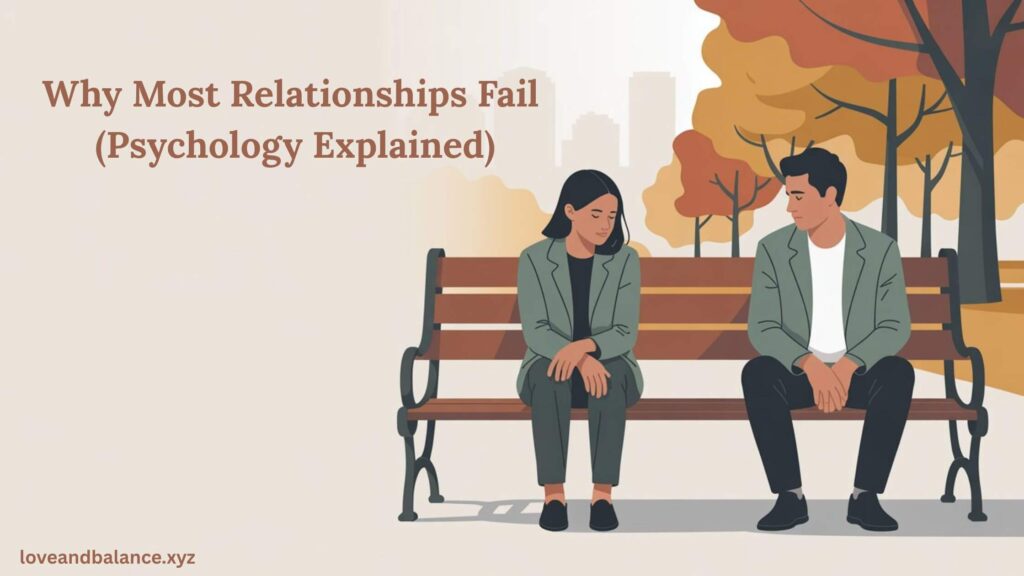
Why Most Relationships Fail (Psychology Explained)
Introduction
Relationships are one of the most powerful and meaningful aspects of life — but they’re also one of the most challenging. Despite the best intentions, a large portion of romantic relationships end in heartbreak. According to psychological research, roughly 40–50% of marriages in many countries end in divorce, and even more dating relationships dissolve before they become long-term commitments.
So why does love often falter? What psychological mechanisms are at play behind breakups, fading passion, and emotional disconnect?
In this blog, we’ll dive deep into the real psychology behind relationship failure, including:
- Common psychological causes
- Research-based insights
- Real relationship case studies
- Practical advice for lasting connection
1. Unrealistic Expectations of Love
Hollywood vs Reality
From an early age, many of us absorb stories of perfect love through movies, books, and fairytales:
The idea that love solves everything
That “true love” means no conflict
Or that a partner completes us emotionally
But real life doesn’t work that way. In reality:
Individuals have unique needs
People make mistakes
Healthy relationships require effort, not magic
2. Poor Communication Is a Breakdown Signal
Communication is often cited as the number one predictor of relationship success or failure.
The Psychology of Communication Breakdowns
Psychologist John Gottman, known for decades of research on couples, identified four communication patterns that predict divorce with over 90% accuracy — the “Four Horsemen”:
Criticism
Contempt
Defensiveness
Stonewalling
When these appear regularly in conversation, emotional distance deepens, and conflict escalates.
In Gottman’s studies, happy couples communicate disagreement without attacking each other’s character — focusing on feelings and needs instead of blame.
Real Case: Laura & Mark
Laura and Mark were together for five years. They broke up primarily because conversations about important topics like money and future goals quickly turned into blame games. Neither learned healthy communication skills, and their arguments left both partners feeling unheard.
Psychology insight: Communication isn’t just about talking — it’s about being understood and respected.
3. Emotional Avoidance and Fear of Vulnerability
The Fear of Getting Too Close
Many people sabotage relationships not because they don’t care, but because they’re scared of getting hurt.
Attachment theory — first developed by John Bowlby and later expanded by psychologists like Mary Ainsworth — reveals that early caregiver experiences shape adult relationship patterns.
There are three primary attachment styles:
| Attachment Style | What It Means | Relationship Impact |
|---|---|---|
| Secure | Comfortable with closeness | Healthy, stable relationships |
| Anxious | Worried about abandonment | Jealousy, neediness |
| Avoidant | Fears intimacy | Emotional distance |
People with avoidant attachment may push partners away when things get serious, even if they care deeply.
A 2014 meta-analysis showed that avoidant and anxious attachment styles are associated with greater relationship conflict and instability compared to securely attached individuals.
Psychological insight: Understanding your attachment style — and your partner’s — helps explain relationship behaviors that might otherwise feel irrational.
4. Lack of Emotional Regulation
Mental health and emotional stability play a huge role in relationships.
Why Emotional Regulation Matters
People who struggle to manage emotions — whether due to stress, anxiety, past trauma, or personality traits — are more likely to:
Escalate small conflicts
Hold grudges
Withdraw when upset
Misinterpret partner intentions
Recognizing emotions
Managing emotional responses
Communicating feelings effectively
Example: Sara & Daniel
Sara frequently shut down during tension, refusing to talk about issues until hours later. Daniel felt ignored and responded with insults. Neither understood emotional regulation, which repeatedly inflamed problems.
Actionable tip: Couples therapy and emotional regulation training can transform how partners respond under stress.
5. Compatibility vs Chemistry
Why Attraction Alone Isn’t Enough
Many relationships start with intense chemistry — passion, excitement, even obsession — but fail because the partners lack long-term compatibility.
Compatibility includes:
- Shared values
- Shared life goals
- Similar communication styles
- Emotional alignment
6. External Stressors and Life Transitions
Relationships don’t exist in a vacuum — finances, job stress, family pressure, and major life changes all impact relational health.
Economic Stress and Divorce
A 2019 study in Family Relations found that financial stress is strongly correlated with relationship conflict and dissolution. Couples struggling with money issues often report:
Increased tension
Less emotional support
Greater blame and withdrawal
Life Transitions
Events like moving cities, becoming parents, or career shifts can strain even solid relationships if partners fail to adapt together.
Actionable strategy: Couples that navigate stress as a team rather than adversaries are statistically more likely to stay together.
7. Lack of Relationship Skills and Education
Most people enter relationships with no formal training, yet we expect mastery.
Why Skills Matter
Skills like:
Conflict resolution
Boundary setting
Empathy
Active listening
Negotiation
…are crucial for healthy relationships.
Interestingly, research shows that couples who attend relationship education workshops have better communication and lower divorce rates.
Insight: Love isn’t enough — intentional skill-building matters.
8. Infidelity and Broken Trust
Infidelity doesn’t always mean the end, but it is one of the most common reasons couples split.
Psychological Effects of Betrayal
Trust is foundational. When violated, it triggers:
Emotional trauma
Hyper-vigilance
Fear of abandonment
Self-blame
A 2020 study revealed that 73% of couples citing infidelity as the reason for breaking up also reported deep emotional wounds that were hard to repair.
Takeaway: Rebuilding trust takes time, transparency, and often therapeutic support.
9. Real Relationships, Real Lessons
Let’s look at two real-world stories to illustrate common pitfalls:
Case Study: Emma & Ryan
Emma and Ryan dated in college. They stayed together for 4 years but constantly fought about priorities — Emma wanted to travel, Ryan focused on work. They never discussed future goals honestly until resentment built up. Eventually, they broke up, not because they didn’t care, but because of misaligned life goals.
Lesson: Early conversations about values and future expectations are essential.
Case Study: Anita & Kabir
Anita and Kabir were married for 7 years. Initially affectionate, they grew distant over time. Kabir often worked late, and Anita felt unheard. They avoided conflict rather than communicating. When arguments did surface, they turned harsh.
They eventually separated — not because of one big betrayal, but because emotional disconnect piled up over years.
Lesson: Consistent emotional investment matters more than occasional romantic gestures.
10. How to Prevent Relationship Failure (Actionable Tips)
Communicate with Intention
Use “I feel” instead of “you always”
Schedule regular check-ins
Listen without interrupting
Invest in Emotional Intelligence
Practice self-reflection
Label emotions clearly
Validate your partner’s feelings
Align on Core Values
Discuss:
- Long-term goals
- Money habits
- Family expectations
- Career plans
Seek Support Early
Couples therapy isn’t only for crisis — it’s a tool for growth.
Build a Friendship First
Passion fades if not anchored in friendship, trust, and respect.
Frequently Asked Questions (FAQ)
1. What psychological reason most relationships fail?
Most commonly, poor communication and unrealistic expectations — especially believing love is effortless.
2. Can relationships survive infidelity?
Yes — but only if both partners choose healing, transparency, and often professional support.
3. Is chemistry enough to sustain a relationship?
No. Chemistry attracts, but compatibility and skills sustain long-term partnership.
4. How important is conflict resolution?
Extremely — studies show it predicts relationship satisfaction more than passion or romance.
5. Do childhood experiences affect adult relationships?
Yes. Attachment styles formed in childhood often influence communication and intimacy patterns in adulthood.
6. Can relationship skills be learned?
Absolutely. Couples who learn and practice emotional skills tend to thrive longer.
Why Most Relationships Fail (Psychology Explained)
Conclusion
Relationships fail for a wide variety of psychological reasons — from weak communication and mismatched expectations to fear of vulnerability and external stressors. However, understanding these core dynamics empowers you to create deeper connection, stronger bonds, and healthier love.
The good news? Most relationship challenges aren’t inevitable. They’re learnable, addressable, and transformable — with honesty, effort, and compassion.
If you’re currently struggling in your relationship, remember: understanding why problems exist is the first step toward solving them.