
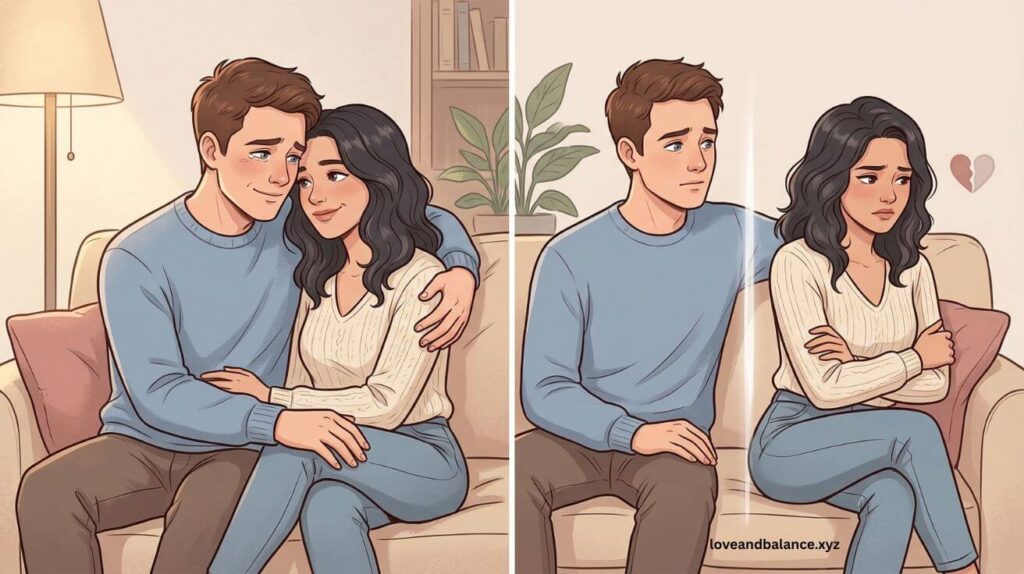
Why Avoidants Pull Away After Intimacy (And What It Actually Means)
In this post, you’ll learn:
What happens inside an avoidant’s mind after intimacy?
Why pulling away is usually a survival reflex, not a rejection of you.
How to respond without chasing, collapsing, or self‑blaming.
What real healing and change can look like for both partners.
What an “Avoidant” Really Is (In Simple Terms)
Clinically, “avoidant” usually refers to an avoidant or dismissive‑avoidant attachment style, which develops when a child learns that expressing needs or emotions doesn’t bring safety, comfort, or a reliable response from caregivers.
In everyday language:
Their nervous system learns that needing people = risk of disappointment or engulfment, so they train themselves to rely almost entirely on themselves.
As adults, they often seem independent, self‑sufficient, and emotionally reserved—which can feel attractive at first, especially to someone who craves stability.
So when we say “avoidant pulls away after intimacy,” we’re not talking about temporary shyness. We’re talking about a deeply wired response to vulnerability.
The Night That Feels Real—And Then the Distance
A Real‑Life‑Style Example
Imagine this:
You’ve been dating Ravi for a few months.
Chemistry is strong, but emotionally, he’s been a bit guarded—sweet, present, but never diving into “deep talk” about fears, past wounds, or long‑term plans.
One night, the conversation flows easily, you share something personal, you kiss, and sex feels unexpectedly tender and connected.
The next morning, he texts you a one‑line “good morning,” and over the next few days, he becomes harder to reach, less affectionate, and more withdrawn.
You might spiral through questions like:
Did I come on too strong?
Was I too emotional?
Did the sex scare him off?
This pattern is extremely common in relationships where one partner has an avoidant attachment.
Why Avoidants Pull Away Right After Intimacy
1. Intimacy Feels Like Exposure, Not Safety
For many avoidants, emotional and physical intimacy triggers a “vulnerability hangover.”
Right after a deeply intimate moment, they often think things like:
“I showed too much of myself.”
“Now they can see my flaws.”
“If I’m this open, they might leave once they really know me.”
Research on attachment shows that avoidant‑attached people tend to suppress emotional needs and avoid high‑intimacy interactions, because closeness activates underlying anxiety and fear of rejection.
So their brain kicks into a self‑protection mode:
Pulling away is not a logical choice; it’s a reflex.
They’re not necessarily “not that into you.” Instead, intimacy feels so intense that distance becomes the only way they know how to calm their nervous system.
2. Closeness Triggers Childhood Conditioning
Many avoidants grew up in environments where:
Emotions were minimised (“don’t cry,” “toughen up”).
Needs were met inconsistently or not at all.
Asking for comfort was met with withdrawal, criticism, or neglect.
In that world, the child learns:
If I keep asking for closeness, the caregiver pulls away.
If I shut down, at least I don’t feel that rejection as strongly.
So as adults, they unconsciously repeat the same pattern:
When intimacy rises → they feel flooded → they pull away to protect themselves.
In other words, the avoidant isn’t running from you; they’re running from an old story inside them that says closeness will hurt.
3. Autonomy Feels Like Survival
Avoidants often equate emotional intimacy with losing independence.
They can feel like:
“If I let myself depend on you, I might lose myself.”
“If I’m too close, you’ll eventually control me or engulf me.”
After a deeply intimate night, that fear can spike:
Talking about “us,” “future,” or “needs” can feel like pressure.
Regular check‑ins or affectionate habits can start to feel like obligations.
So they create distance:
Less texting, fewer calls, more “I need space.”
They may even start to focus on small flaws in the relationship or in you, as a way to justify pulling back.
This isn’t about your worth. It’s about how they learned to protect their sense of self.
4. Fear of Being “Too Much” or “Not Enough”
Research on attachment‑related anxiety shows that avoidant individuals often fear being rejected for being “too much” (needy, emotional, dependent) or “not enough” (unlovable, flawed).
After intimacy, two fears can clash:
“I trusted you, and now you’ve seen the real me.”
“If they stay, it will raise my expectations, and I’m scared they’ll leave later.”
Pulling away becomes a way to both protect themselves and test you:
“If I become distant, will you chase me?”
“If you leave, at least I control the timing and reduce the shock.”
This is why some avoidants cycle between coming close and then abruptly pulling away—a pattern known as “avoidant deactivation.”
What an Avoidant Experiences After Intimacy (Internal Story)
Often, their inner world sounds like this:
“I really like this person, but the closer I get, the more I feel like I’m losing control.”
“I don’t even know how to talk about this. I was never taught how to be vulnerable.”
“If I slow down, maybe they’ll stop pushing so hard.”
They may also feel:
Conflicted: they want connection but feel panicked by it.
Guilty: They know their distance hurts you, but they truly don’t feel capable of staying open yet.
That’s why, when someone says, “He’s interested in me but then pulls away after intimacy,” the reality is often:
Yes, he cares.
But care feels dangerous, so he retreats.
Why You Feel Rejected (Even If They Still Care)
For an anxiously attached or emotionally expressive partner, an avoidant’s pull‑away can feel like:
A personal rejection.
Proof that you’re “too intense” or “too much.”
A threat that the relationship is ending.
Psychologically, this is how it registers:
Your brain sees less contact, less warmth, and less emotional availability.
That pattern matches your own fear of abandonment or being unlovable.
So even if they still care, the behaviour feels like withdrawal, and your nervous system reacts as if you’re being left.
This is why so many people with avoidant partners end up asking:
“Why do they pull away right after things feel good?”
“Did I do something wrong?”
The answer is usually no, you didn’t do anything wrong. You simply met an emotional pattern that’s designed to keep distance, not to hurt you.
How to Tell If This Is Avoidant Pull‑Away vs. Just “Not Interested”
Not every partner who distances after intimacy is avoidant, and not every avoidant is toxic. Here’s how to tell the difference:
Signs of Avoidant Pull‑Away After Intimacy
Behavior | What It Might Mean |
Suddenly less responsive to texts, calls, or messages | They may be over‑stimulated and need space to regulate. |
Avoiding deep conversations about “us,” feelings, or future | Intimacy feels like pressure, so they retreat. |
Becoming more critical, withdrawn, or distant—but not fully leaving | This can be a deactivation phase, not a discard. |
Saying “I need space” or “I’m overwhelmed” | They are trying to protect their sense of autonomy. |
Signs They Might Just Be Low‑Interest or Emotionally Unavailable
Behavior | What It Might Mean |
No clear communication; they just ghost or fade | Low investment or mixed intentions. |
Rarely initiates, even during calmer periods | They may not be truly invested. |
Consistently avoids emotional or physical intimacy, not just after closeness | They may not be ready or willing to be in a relationship. |
The key question:
Is this a pattern that repeats after moments of closeness, or is this a general low‑investment pattern regardless of intimacy?
If it’s the former, it’s more likely an avoidant stress response. If it’s the latter, it’s more about their general level of interest.
What You Can Do (Without Chasing or Self‑Abandoning)
1. Name What You Notice, Without Blaming
Instead of “Why are you ignoring me?” try:
“I noticed after we were really close, you’ve seemed a bit quieter. I’m wondering if something shifted for you?”
This keeps the door open but doesn’t attack their autonomy.
2. Protect Your Own Needs
You don’t need to shrink yourself to keep someone comfortable. Healthy responses include:
Saying, “I’m okay giving you space, but I also need some clarity later so I don’t spiral.”
Setting boundaries like “I can’t keep over‑texting or over‑checking if you’re withdrawing.”
3. Ask for a “Pause” Instead of Chaos
Instead of hot‑mess texting or chasing, you can:
“If you ever need space after something intimate, can we agree on a short break plus a time to reconnect?”
This honours their need for distance while also tending to your anxiety.
4. Notice Your Own Attachment Patterns
If you tend to:
Chase when they pull away.
Panic when they’re quiet.
Feel “not enough” when they create distance.
Those reactions are clues to your own attachment history.
You can work on:
Soothing your anxious brain when they withdraw.
Reminding yourself that their pull‑away is not always about you.
Building your own emotional support system outside the relationship.
Can an Avoidant Actually Change?
Yes—but change is gradual and not guaranteed.
What Healing Looks Like for an Avoidant
In therapy and healing work, avoidant‑style change typically looks like:
Learning to name their own emotions instead of suppressing them.
Understanding that space and closeness can coexist.
Practising small doses of vulnerability (sharing one fear, one need, one boundary) and seeing that it doesn’t always lead to disaster.
Important truth:
Change requires self‑awareness + willingness to feel uncomfortable.
Some avoidants will never fully become “secure,” but they can become more emotionally available with the right partner and support.
What You Can Reasonably Expect
That they will sometimes still pull away when intimacy feels intense.
That they may struggle to communicate quickly or emotionally.
That over time, with safety and consistency, they may:
Withdraw less abruptly.
Re‑engage more clearly.
Talk about their fears instead of silently disappearing.
If you’re constantly left confused, anxious, or feeling small, it’s okay to ask: “Is this relationship actually safe for me?” not just “Can I fix them?”
When to Reconsider the Relationship
There are times when staying in a loop with an avoidant partner can start to harm you more than help either of you. Ask yourself:
Are they willing to talk about patterns, or do they dismiss your concerns?
Do they rarely initiate emotional or physical closeness, or is this truly a reaction to high‑intimacy moments?
Do you feel smaller, more anxious, or more depressed over time?
If:
They’re not self‑aware.
They refuse support (therapy, coaching, reflection).
You repeatedly feel like you’re bending your needs to fit their distance…
…it might be kinder to both of you to step back or walk away, not as punishment, but as self‑care.
Why Avoidants Pull Away After Intimacy (And What It Actually Means)
Frequently Asked Questions
Q: Why do avoidants pull away right after being emotionally or physically intimate?
Avoidants often pull away because intimacy triggers deep‑seated fears of vulnerability, engulfment, or rejection rooted in childhood experiences where closeness didn’t feel safe. After a moment of high emotional or physical closeness, their nervous system may interpret that as “danger,” so they instinctively create distance to feel in control again. This is less about rejecting you and more about protecting themselves from feeling too exposed.
Q: Does this mean they don’t care about me?
Not necessarily. An avoidant can genuinely care and still feel flooded by closeness. Pulling away after intimacy is usually a reflex tied to fear and self‑protection, not proof that they’re uninterested or don’t have feelings for you. Many avoidants care deeply but don’t yet know how to tolerate vulnerability without shutting down or distancing.
Q: Is this the same as “avoidant discard”?
It can be similar, but it isn’t always the same. Avoidant deactivation is a shorter‑term withdrawal where they pull back after closeness but may return and re‑engage, especially if they feel safe and not pressured. Avoidant discard is when they emotionally or practically end the relationship, often without clear communication. The key difference is whether they consistently withdraw and then reconnect, or whether the pull‑away feels like a permanent exit.
Q: How can I tell if this is an avoidant pattern vs. just mixed feelings?
If they pull away specifically after intense emotional or physical closeness, then slowly come back once things calm down, it’s more likely an avoidant stress response. If they’re generally inconsistent, rarely initiate, or avoid closeness at all times (not just after intimacy), it may be more about low interest or general emotional unavailability. Repeated cycles of closeness → withdrawal → reconnection point strongly to an avoidant‑style pattern.
Q: Should I chase them when they pull away?
Chasing often intensifies the anxious‑avoidant cycle and can make them feel pressured or suffocated. Instead, many therapists suggest:
Give them space, but not complete silence.
Calmly name your experience: “I noticed you’ve been more distant; I’m feeling anxious and would like to talk when you’re ready.”
This balances honouring their need for autonomy with protecting your own emotional boundaries.
Q: How should I talk to an avoidant about this pattern?
Use calm, non‑accusatory language and focus on your feelings, not their “problem.” Example:
“I’ve noticed that after we’re really close, you seem to pull back a bit. I’m wondering if that’s something you feel, too?”
“When that happens, I feel confused and worried. Can we talk about how we can both feel safe in the relationship?”
This invites collaboration rather than blame, which feels safer for an avoidant.
Q: Can an avoidant partner actually change?
Yes, but change is gradual and depends on their self‑awareness, willingness to reflect, and often professional support. With therapy, emotional safety, and a partner who doesn’t chase or punish their distance, many avoidants can learn to:
Tolerate closeness without shutting down.
Communicate their need for space instead of silently disappearing.
Re‑engage more clearly after withdrawal.
Change is not guaranteed, but it’s possible if they’re motivated and receive consistent support.
Q: When should I consider walking away from an avoidant partner?
Consider reevaluating the relationship if:
You’re constantly anxious, self‑doubting, or depressed because of their pull‑away‑and‑come‑back pattern.
They refuse to discuss their behaviour or acknowledge your feelings.
They rarely initiate closeness and only show up when you open up emotionally or physically.
Walking away is not about “giving up” on them; it’s about protecting your emotional well-being when the dynamic consistently harms you more than it helps.
Q: How can I protect my own mental health in this dynamic?
You can:
Notice your own attachment patterns (e.g., anxious tendencies) and work on self‑soothing.
Maintain boundaries around communication and emotional demands.
Build a support system outside the relationship (friends, therapy, journaling).
Remind yourself that their pull‑away is not always about your worth, even though it can feel that way emotionally.
Conclusion
Pulling away after intimacy is often one of the most confusing and painful patterns in avoidant relationships—but it rarely means a lack of care. For avoidants, closeness can feel like a threat to their sense of safety, autonomy, or self‑worth, so distance becomes an automatic survival reflex rather than a deliberate rejection of you.
Understanding this pattern helps you respond with more clarity instead of panic: you can protect your own needs, set gentle boundaries, and communicate honestly without chasing or abandoning yourself. At the same time, it’s important to recognize that healing an avoidant attachment is their journey, not your responsibility. If the emotional cost to you becomes too high, stepping back or walking away can be the healthiest choice.
Ultimately, this dynamic isn’t about fixing them or forcing yourself to tolerate more pain; it’s about building a relationship where both partners feel safe enough to be close—and far enough to breathe.