
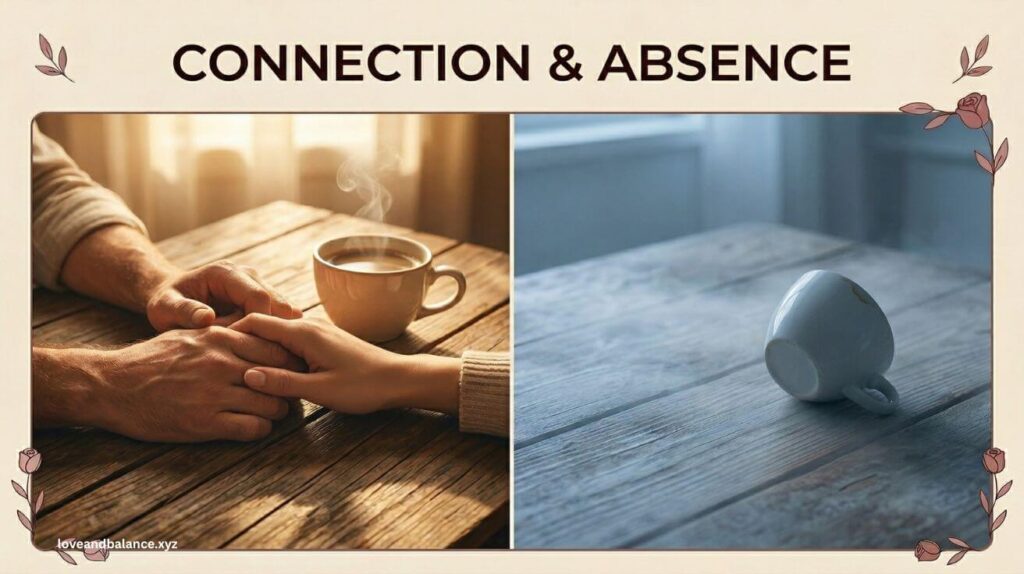
Relationship Burnout vs. Falling Out of Love: How to Know the Difference (And What to Do Next)
You used to count the minutes until you saw them. Now, the idea of another long conversation feels like running a marathon on no sleep. You wonder — am I just tired, or is something deeper broken?
This question is one of the most painful crossroads in modern love. And you’re not alone in standing there.
Millions of couples every year mistake relationship burnout for the end of love — and some walk away from something that could have been saved. Others mistake falling out of love for burnout and spend years trying to revive feelings that have genuinely faded. Getting this distinction right can change the entire trajectory of your relationship.
This guide is written from real research, real emotional experiences, and a deep understanding of relationship psychology. Let’s get into it.
What Is Relationship Burnout, Really?
Relationship burnout is not a bad week or a rough patch. It is the slow, cumulative depletion of emotional, mental, and sometimes physical energy within a romantic relationship — usually caused by prolonged stress, unmet needs, emotional labour, and unresolved conflict.
A landmark 2025 study published in PubMed — titled “Love on Empty: The Development and Validation of a Comprehensive Scale to Measure Burnout in Modern Relationships” — identified two core dimensions of relationship burnout:
Relationship Depletion and Exhaustion — emotional detachment, diminished appreciation, poor communication, resentment, and unmet emotional or sexual needs.
Relational Overload — external stressors, partner demands, and role strain spilling over into the relationship.
What’s important here is the phrase “love on empty.” The love doesn’t necessarily disappear. The tank just runs dry from the effort of keeping things afloat with no meaningful refuelling.
Think of it like this: imagine you’re driving a car you genuinely love. You love the design, the feel, the journey. But nobody refills the fuel, the engine gets neglected, and slowly the car stops running. You might think, “Maybe I just don’t love this car anymore.” But what if the car just needed maintenance?
What Does “Falling Out of Love” Actually Mean?
Falling out of love is a fundamentally different experience. It refers to a genuine, progressive fading of romantic feelings, attraction, and emotional attachment toward your partner — not caused by exhaustion, but by a natural or gradual disconnection at the core of the bond.
Research in attachment theory suggests that falling out of love often involves:
A loss of idealisation of the partner (seeing them as “just ordinary”)
Decreased oxytocin and dopamine responses to their presence
Emotional indifference — not frustration or resentment, but simply not caring
A lack of desire to rebuild, reconnect, or invest
The key psychological distinction here is the direction of emotion. When you fall out of love, the feelings are gone — or going. When you’re burned out, the feelings are buried under rubble. As TherapyGroupDC notes: “With burnout, the underlying love remains — it’s just buried under layers of frustration, exhaustion, and emotional disconnection.”
The Most Telling Signs: Burnout vs. Falling Out of Love
This is where most people get confused. The surface symptoms can look nearly identical — withdrawal, less intimacy, emotional distance, fewer meaningful conversations. But the internal experience is very different.
Signs of Relationship Burnout
You feel emotionally drained after interactions with your partner, even simple ones
You love your partner but feel hopeless about fixing recurring problems
You are exhausted from trying — not from indifference
Physical symptoms appear: headaches, sleep disturbances, digestive issues from chronic relationship stress
You feel resentment — and resentment is always a sign of unmet need, not absence of love
You still care about their well-being and feel hurt when they’re sad
You’ve stopped communicating, not because you don’t want to, but because every conversation ends the same frustrating way
You feel alone despite being together — two people living parallel lives under one roof
Signs You May Be Falling Out of Love
You feel indifferent, not angry or resentful — just… nothing
Their presence or absence doesn’t significantly affect your mood
You find yourself genuinely attracted to others and feel little guilt about it
You don’t miss them even when they’re away for extended periods
Future plans that include them feel suffocating rather than exciting — not just boring
You don’t find yourself wanting to fix things — you feel fine just walking away
You feel relief at the idea of the relationship ending, not grief
The critical test: When you imagine losing them forever, do you feel devastation or relief?
If you are devastated, you are almost certainly dealing with burnout.
If relief, it may be a deeper disconnection.
Real Stories That Illustrate the Difference
Priya and Arjun: The Burnout That Nearly Ended Their Marriage
Priya, 34, a marketing professional from Mumbai, describes her third year of marriage: “I used to feel nothing when Arjun walked into the room. I thought I’d fallen out of love. I told my therapist I wanted a divorce.”
What her therapist helped her uncover was different: Priya was working 60-hour weeks, managing most household responsibilities, and emotionally carrying her husband’s anxiety about his job loss — for over two years. She hadn’t stopped loving Arjun. She had stopped having anything left to give.
Three months of couples therapy, a renegotiated division of responsibilities, and two weeks away from their daily routines helped them reconnect. Today, they describe their relationship as stronger than it ever was during their honeymoon phase.
Priya’s experience mirrors what a 2025 study in the International Journal of Management found — that a partner’s perceived stress directly correlates with your own burnout levels, creating a spillover cycle that weakens the entire relationship’s support structure.
Meera and Siddharth: When It Really Was Over
Contrast Priya’s story with Meera, 29, who spent two years in couples therapy trying to “fix” her relationship with Siddharth before realising something different was true.
“I wasn’t exhausted from trying. I just didn’t want to try. I was never angry at him — I just didn’t feel much about him at all. I cared about him as a person. But I wasn’t in love.”
Meera’s story isn’t a failure. It’s an honest reckoning with the reality that sometimes love runs its natural course — and the kindest thing for both people is acknowledgement and a gentle, respectful separation.
The difference? Priya felt pain and grief at the thought of losing her husband. Meera felt clarity and calm.
Why Relationship Burnout Is Surging in Our Generation
This is not a timeless human problem alone — it is a modern epidemic accelerated by our current lifestyle.
A 2025 Psychology Today article cited research by Kocyigit and Uzun showing that the inability to regulate emotions and the lack of authenticity within a relationship are among the strongest predictors of couple burnout today. In an era of social comparison, hustle culture, financial pressure, and performative relationships on social media, couples are under pressure their grandparents never faced.
Key modern contributors to relationship burnout include:
Digital overconnection and emotional unavailability — being physically present but mentally absorbed in screens
Financial and career stress bleeding into emotional intimacy (the spillover effect)
Emotional labour imbalance — one partner carrying the majority of relational work: planning, communicating, soothing
Unresolved attachment wounds — anxious and avoidant patterns creating cycles of pursuit and withdrawal that exhaust both partners
Pandemic aftermath — years of forced proximity with limited outside outlets depleted many couples’ emotional reserves
This doesn’t make burnout inevitable. But it does make it understandable — and most importantly, treatable.
Can Relationship Burnout Be Healed?
Yes. Burnout — unlike lost love — is recoverable. But it requires intentional intervention, not just time.
1. Name It Without Blame
The first step is acknowledging that what you’re experiencing is burnout, not failure. Burnout is a systemic problem — it means your relationship’s emotional ecosystem has been under stress for too long. It doesn’t mean you chose wrong or that the relationship is fundamentally broken.
2. Reduce the Emotional Load
Identify where the imbalance lives. Who is doing most of the emotional labour? Who initiates repair after conflict? Who plans, who remembers, who follows through? Redistributing this load is not optional — it’s the core healing work.
3. Create Intentional Disconnection (to Reconnect)
Counterintuitively, couples experiencing burnout sometimes need space before closeness. A weekend apart, separate hobbies, time with friends — these are not threats to the relationship. They are the breathing room needed to stop associating your partner with depletion.
4. Rebuild Micro-Moments of Connection
Research by Dr. John Gottman of The Gottman Institute shows that small, daily moments of connection — a 6-second kiss, asking “how are you feeling today” with genuine interest, a touch on the shoulder — matter more for long-term relationship health than grand romantic gestures. These micro-moments rebuild the emotional bank account that burnout drains.
5. Seek Couples Therapy
This is not a last resort. It is a wise, early-stage tool. TherapyGroup DC notes that couples therapy is particularly effective for burnout because it provides a structured space to address recurring patterns — the very patterns that deplete partners most. Gottman Method therapy, Emotionally Focused Therapy (EFT), and Imago Relationship Therapy have all shown strong results for burnout recovery.
When It’s Time to Accept You’ve Fallen Out of Love
Not every relationship is meant to be saved, and recognising that is not defeat — it is emotional maturity.
If, after honest reflection and possibly professional support, you recognise that:
Your indifference is not tied to exhaustion but to a genuine absence of connection
You have tried and invested without any internal desire to continue trying
The thought of rebuilding brings no hope, only dread
You feel more yourself when imagining a life without the relationship
…then it may be time to acknowledge that the love has genuinely run its course. Ending a relationship with kindness, honesty, and respect is not a failure. It is an act of love — for yourself and for your partner, who deserves someone who is fully present.
A Quick Self-Assessment: Which Are You Experiencing?
Ask yourself these questions honestly:
Question | Burnout Answer | Falling Out of Love Answer |
When you imagine losing them, how do you feel? | Devastated, terrified | Relieved, or neutral |
Are you angry or resentful? | Yes, often | No, mostly indifferent |
Do you still care about their happiness? | Deeply | Not particularly |
Would you want to fix things if you had the energy? | Yes | Not really |
Do you miss who you used to be together? | Painfully | Not much |
Does it hurt when they seem disconnected? | Yes | No |
If most of your answers lean left, you are likely burned out, and there is real hope.
The Importance of Not Deciding in the Dark
One of the most dangerous mistakes couples make is making permanent decisions during temporary emotional states. Burnout creates a kind of emotional fog that distorts perception. When you’re depleted, your partner can feel like the source of your pain — even if they are actually just the person standing closest to you while you suffer.
This is why relationship psychologists consistently advise: do not make major relationship decisions at the height of burnout. Seek support first. Allow the emotional system to stabilise. Then assess.
As the 2025 PubMed research emphasised, relationship burnout is a measurable, diagnosable state — not just a feeling — and it deserves to be taken as seriously as individual mental health burnout.
Relationship Burnout vs. Falling Out of Love: How to Know the Difference (And What to Do Next)
FAQs: Relationship Burnout vs. Falling Out of Love
Q1: Can you love someone but feel no emotion toward them temporarily?
Yes. This is one of the hallmarks of relationship burnout. Emotional numbness in burnout is a protective response — your nervous system shuts down feeling to prevent further depletion. It does not mean love is absent; it means your emotional reserves are critically low.
Q2: How long does relationship burnout last?
Without intervention, burnout can persist for months or even years, deepening over time. With intentional steps — therapy, communication changes, emotional load redistribution — many couples begin feeling meaningful shifts within 8–12 weeks.
Q3: Is relationship burnout the same as compassion fatigue?
They overlap but are distinct. Compassion fatigue usually refers to caregivers depleted by supporting others’ pain. Relationship burnout is broader — it includes exhaustion from conflict, emotional labor, unmet needs, and role strain within the romantic bond.
Q4: Can falling out of love happen suddenly?
Rarely. What often feels sudden is actually the cumulative result of gradual emotional disconnection — small moments of misattunement, unrepaired conflicts, or growing incompatibility that finally reaches a tipping point of conscious awareness.
Q5: Should I tell my partner I’m burned out?
Yes — with care and context. Frame it as a shared problem rather than a personal accusation. “I’ve been feeling emotionally depleted, and I want us to figure this out together” is far more constructive than “you exhaust me.” Vulnerability, when expressed safely, is one of the most powerful tools for reigniting emotional intimacy.
Q6: What if my partner is burned out but I’m not?
This is more common than people realise. One partner can hit burnout while the other still feels engaged. In this case, the non-burned-out partner needs to resist taking it personally and instead focus on understanding what the depleted partner needs — less demand, more space, more appreciation. Couples therapy is especially effective in this scenario.
Q7: Can relationship burnout turn into actually falling out of love?
Yes — if left unaddressed long enough. Chronic burnout erodes emotional connection to the point where the underlying love becomes inaccessible. This is why early recognition and intervention matter so much.
Final Thoughts: Your Relationship Deserves the Right Diagnosis
Before you make any decision — whether to fight for your relationship or let it go — give yourself the gift of clarity over confusion. Burnout and lost love wear the same face but live in very different rooms.
If there is still care, still grief, still resentment (because resentment always means you still care enough to be hurt) — there may be a relationship worth recovering.
If there is genuine peace at the idea of separation, sustained indifference, and no internal pull to rebuild — honour that truth too.
Love is not just a feeling. It is also a choice, a practice, and a system — and systems can be repaired. But only when we see them clearly first.
This article is written based on peer-reviewed psychological research, clinical findings, and real relationship experiences. If you are struggling with your relationship, consider speaking with a licensed couples therapist or counsellor. Resources like the Gottman Institute, Psychology Today’s therapist finder, or platforms like BetterHelp can connect you with professional support.