
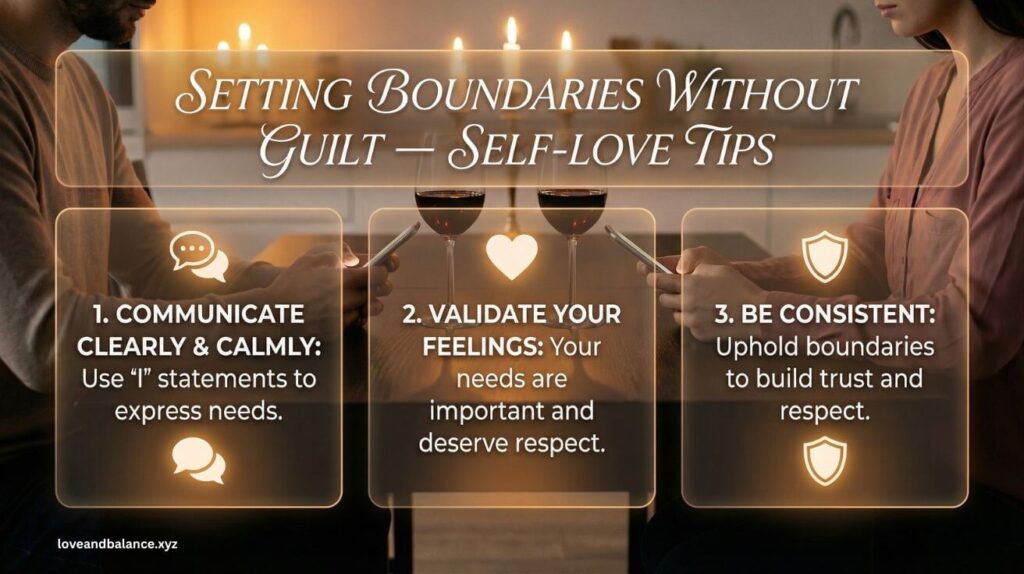
How to Set Boundaries Without Feeling Guilty (And Why It’s the Most Loving Thing You Can Do)
You finally said no. And now? You feel terrible about it.
That creeping guilt — the second-guessing, the “maybe I should have just said yes” — is one of the most common emotional traps people face today. Whether it’s a pushy coworker, a demanding family member, or a relationship that keeps taking more than it gives, the moment you try to protect your peace, guilt shows up to convince you that you’re the problem.
You’re not.
Setting boundaries isn’t selfish. It’s survival. And in 2026, more people are waking up to the truth that loving others and protecting yourself are not opposites — they’re connected.
Here’s how to set healthy boundaries without letting guilt run the show.
Why Guilt Hits So Hard When You Say “No”
Before you can stop feeling guilty for setting limits, it helps to understand why the guilt appears in the first place.
Most of us were taught — directly or indirectly — that being a good person means being available, agreeable, and endlessly accommodating. Saying no felt dangerous: it might mean people would like us less, love us less, or leave.
This is called people-pleasing, and it’s deeply rooted in fear — fear of rejection, conflict, or being seen as cold or uncaring.
The problem? When you never say no, you slowly stop showing up for the most important person in your life: yourself.
5 Ways to Set Boundaries Without Feeling Guilty
1. Understand that a boundary is not a punishment
A boundary is simply a statement of what works for you and what doesn’t. It’s not an attack on the other person. When you say “I can’t take that call after 8 PM,” you’re not saying “I don’t care about you.” You’re saying “I need rest to show up well for everyone, including you.”
Try reframing it this way: setting a boundary is an act of honesty, not hostility.
2. Start small — you don’t have to overhaul everything at once
If you’ve spent years saying yes to everything, suddenly drawing firm lines in every area of your life will feel overwhelming — and the guilt will be intense.
Instead, pick one area. Maybe it’s your work schedule. Maybe it’s one relationship that tends to drain you. Practice the language. Notice that the world doesn’t end when you say no.
Small wins build the emotional muscle that makes bigger boundaries easier over time.
3. You don’t owe anyone an explanation
This is where many people stumble. They set a boundary, and then immediately try to justify it with a long explanation — hoping the other person will understand and approve.
But here’s the thing: approval isn’t required.
“I’m not available this weekend” is a complete sentence. So is “That doesn’t work for me.” You can be kind, calm, and clear — without delivering a defence.
The more you over-explain, the more it signals that you’re not sure you have the right to the boundary in the first place. You do.
4. Expect discomfort — that doesn’t mean you’re wrong
When you set a new limit with someone who isn’t used to hearing “no” from you, there will likely be some friction. They might push back. They might seem hurt or surprised.
This discomfort — both theirs and yours — is normal. It’s the adjustment period.
Guilt tends to arrive loudest in this window, trying to convince you that the friction proves you were wrong to say anything. It doesn’t. It just means change is happening.
Stay the course. The discomfort passes. The respect that follows doesn’t.
5. Remember: your needs are not inconveniences
One of the deepest roots of guilt is the unconscious belief that your needs are a burden — that having limits makes you “too much” or “not enough” for the people in your life.
Self-love, at its core, is learning to treat your own needs as valid. Not more important than others’, but not less important either.
When you give from a full cup — when you’ve rested, set your limits, and protected your peace — you show up better for everyone. The people who truly care about you will recognize that over time.
How Boundaries Transform Your Relationships
Here’s something surprising: setting boundaries often improves relationships rather than damaging them.
When both people are honest about what they can and can’t give, there’s less resentment, less guessing, and more genuine connection. Healthy boundaries allow individuals to communicate needs clearly while protecting emotional health — and when boundaries are respected, relationships feel safer, more balanced, and more open. Counselingcorner
The relationships that crumble when you set limits? Those weren’t built on mutual respect to begin with. And that’s painful to acknowledge — but it’s also freeing.
Boundaries at Work: A Non-Negotiable for Your Mental Health
The pressure to be constantly available — to answer messages after hours, to take on extra work without question — has made burnout one of the defining issues of our time. Burnout is no longer framed as a personal failure or lack of resilience; chronic stress, particularly related to work and caregiving, is increasingly recognized as a legitimate mental health concern. Favormentalhealthservices
Work boundaries might look like:
Not checking email after a set hour
Saying no to projects that exceed your bandwidth
Taking your lunch break — actually taking it
Having an honest conversation with your manager about workload
None of these makes you lazy or uncommitted. They make you sustainable.
A Note on Guilt vs. Your Values
Not all guilt is bad. Sometimes, guilt is a signal that you’ve acted against your own values — and that’s worth paying attention to.
But the guilt that shows up when you simply protect your time, energy, or emotional space? That guilt is a habit, not a truth. It’s the echo of old conditioning telling you that you don’t deserve the space you’re claiming.
You do.
Learning to distinguish between guilt as a compass and guilt as a reflex is one of the most important emotional skills you can develop.
You Can’t Pour from an Empty Cup
The most loving, generous, emotionally present version of you exists on the other side of healthy boundaries.
So the next time guilt whispers that you shouldn’t have said no, try saying this instead:
“I set that boundary because I matter too. And that makes me better for everyone I love.”
Start there. One boundary at a time.
How to Set Boundaries Without Feeling Guilty (And Why It’s the Most Loving Thing You Can Do)
❓ Frequently Asked Questions
1. Why do I feel guilty when I set boundaries?
Guilt around boundaries is extremely common, especially for people who were raised to prioritize others’ feelings over their own. Often, what feels like guilt is actually fear — fear of disappointing someone, fear of conflict, or fear of being seen as selfish. This “fake guilt” is your nervous system reacting to an old pattern, not a signal that you’ve done something wrong. Recognizing the difference is the first step toward setting limits with confidence.
2. Is setting boundaries selfish?
No — setting boundaries is one of the most selfless and loving things you can do in a relationship. When you are clear about your needs, you show up more authentically, with less resentment and more presence. Boundaries don’t push people away — they invite others to understand how to love and respect you better. As Brené Brown famously noted, people who have the most compassion also have the clearest boundaries.
3. How do I set a boundary without feeling guilty?
Here are four evidence-backed strategies:
Identify fake guilt — ask yourself if you’re feeling fear of disapproval rather than actual remorse
Use your values as your anchor — remember why you set the boundary (reduced stress, more self-worth, healthier connection)
Be clear and direct — you don’t need to over-explain or apologize; simple statements like “I’m not available for calls after 7 PM” are enough
Practice self-compassion — remind yourself that your needs are valid and you deserve to have them respected
4. What does a healthy boundary actually sound like?
Healthy boundaries are calm, clear, and kind — not harsh or aggressive. Examples include:
“I can’t take on extra work right now, but I’d be happy to help next week.”
“I need some quiet time after work, so I won’t be available for calls until later.”
“I appreciate your advice, but I’d rather make this decision on my own.”
You are not leaving room for negotiation, but you are communicating with warmth and respect.
5. Why do people get angry when I set boundaries?
When someone reacts with anger to your boundary, it’s often because they were benefiting from you not having one. Their reaction is an emotion they are responsible for managing — not you. Your job is to set the boundary clearly and firmly; it is not your responsibility to control how someone else responds to it.
6. Can setting boundaries actually improve my relationships?
Absolutely. Boundaries are the foundation of healthy, loving relationships because they create a space where both people feel safe, respected, and valued. Without boundaries, love can quietly turn into control, obligation, or resentment. When you model healthy limit-setting, you also give the people around you permission to do the same — creating a ripple effect of mutual respect and authentic connection.
7. How do I set boundaries with someone I deeply love without hurting them?
The key is to separate the boundary from the relationship. Setting a limit is not a rejection of the person — it is a statement about what you need to show up fully for them. Deliver your boundary with empathy: acknowledge their feelings, stay firm in your need, and reassure them of your care. For example: “I love spending time with you, and I also need evenings to recharge. Can we plan something on weekends instead?”
8. What is the connection between boundaries and self-love?
Boundaries are a direct expression of self-love and self-respect. When you protect your time, energy, and emotional space, you are communicating — to yourself and others — that your wellbeing matters. Consistently honoring your own needs builds inner trust, reduces anxiety, and helps you show up as a healthier, more whole version of yourself in every relationship.
9. How do I start setting boundaries if I’ve never done it before?
Start small. Practice saying no to low-stakes requests before tackling more emotionally charged conversations. Use simple, clear language without excessive justification. Write down your values and the reasons your boundary matters to you — this gives you clarity when you feel your resolve wavering. Remember: every time you honor a boundary, you are building the emotional muscle to do it again.
10. Are boundaries permanent, or can they change?
Boundaries are flexible and evolving, not rigid walls. As relationships grow and circumstances change, your needs may shift too. The goal is not to build barriers but to create living guidelines that reflect your current emotional, physical, and mental needs. Revisiting and adjusting your boundaries as needed is a sign of emotional maturity, not inconsistency.
Download my free ‘Boundary Scripts PDF‘ — 10 ready-to-use phrases to set limits without guilt or conflict.
Related reads you might enjoy: