
Feeling Lonely in a Relationship? Here’s Why (And What It Really Means)
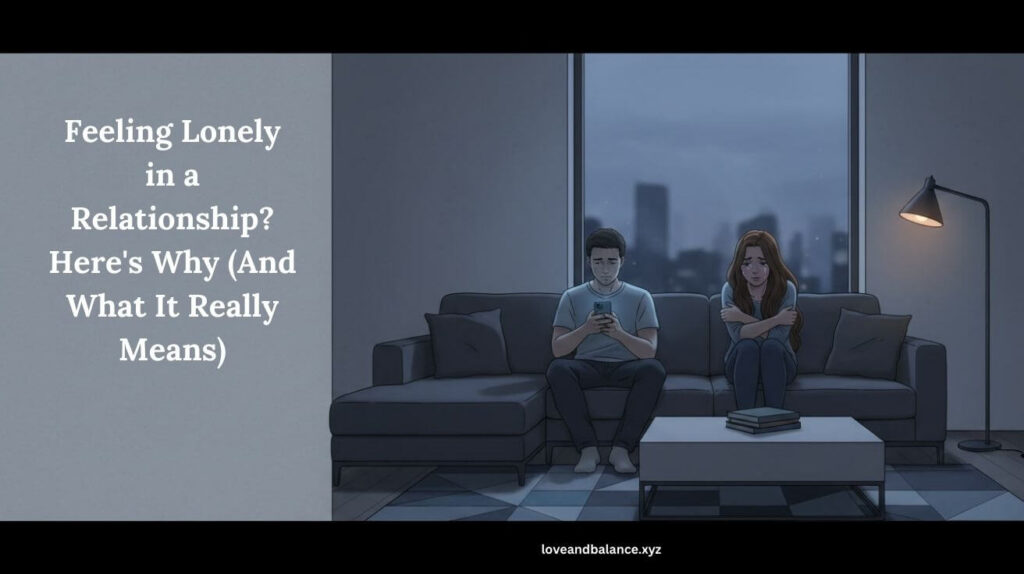
There is a particular kind of ache that no one talks about enough — the loneliness you feel when someone is right there, sitting next to you, breathing the same air, sleeping in the same bed — and yet you have never felt more alone in your life.
If that sentence just hit you somewhere deep, you are not broken. You are not dramatic. And you are definitely not the only one.
According to a 2024 report by Harvard’s Making Caring Common project, 81% of lonely adults reported anxiety or depression, and a significant portion of them were not single. They were in relationships. Committed ones. Long-term ones. Some were even married. The American Psychiatric Association found in early 2024 that 30% of adults experience feelings of loneliness at least once a week, and 10% feel it every single day.
So if you are feeling lonely while technically being “with someone,” you are not imagining things. You are experiencing something that millions of people quietly carry, too embarrassed to name it.
Let’s name it together — and more importantly, let’s figure out why it’s happening.
It’s Not About Being Alone
Here’s the first and most important thing to understand: loneliness in a relationship has almost nothing to do with physical presence.
Psychologists define loneliness as the gap between the connection you desire and the connection you actually feel. It’s not about whether someone is in the room. It’s about whether they are truly there with you — emotionally, mentally, and intentionally.
Think about this scenario: Maya and her partner of four years come home every evening. They eat dinner together, scroll their phones side by side, and go to sleep in the same bed. But when Maya cries, he doesn’t ask why. When she shares exciting news from work, he nods without looking up. When she tries to start a real conversation, it dies within two minutes. Maya isn’t alone. But Maya is unbearably lonely.
This is far more common than most people admit. A Reddit thread with hundreds of responses revealed that people most often realised their loneliness when they felt that being with their partner offered less comfort than being actually alone. One user described it as living “more like roommates than partners.” Another said she felt she was “talking to herself” while her partner sat right across from her.
The Science Behind Relationship Loneliness
A study published in the Journal of Research on Adolescence (2022) followed 937 individuals from 480 couples and found something striking: higher levels of loneliness in one partner directly correlated with lower relationship satisfaction in both partners. Not just the lonely person — both people suffered. Loneliness in a relationship is not a solo problem. It’s a relational one.
The same study found that lonely individuals reported more frequent conflicts, lower levels of self-disclosure, and reduced emotional closeness — all without necessarily realising that loneliness was the root cause.
More recently, a 2024 research study explored how loneliness affects a person’s awareness within their relationship. The findings showed that people who felt lonely were significantly less attuned to their partner’s needs and cues — meaning they could no longer accurately read emotional signals, which increased misunderstandings and distrust. In other words, loneliness doesn’t just make you feel bad. It actively makes the relationship worse, often invisibly.
Why You’re Really Feeling Lonely: The 6 Hidden Causes
1. You’ve Stopped Having Real Conversations
When was the last time you and your partner talked about something that truly mattered? Not the grocery list. Not who picks up the kids. Not what to watch on Netflix.
When couples get caught in the daily grind, their conversations slowly shift into pure logistics. What was once vulnerability and depth becomes scheduling and obligation. This doesn’t happen because love died — it happens because life got louder. And the quiet erosion of deep conversation is one of the most common gateways to relationship loneliness.
2. Your Emotional Bids Are Being Missed
Dr. John Gottman, one of the world’s leading relationship researchers, coined the term “emotional bids” — those small, everyday moments when one partner reaches out for connection. A touch. A joke. A “look at this.” A sigh.
When those bids go consistently unnoticed or are dismissed, the person reaching out starts pulling back — and the emotional distance widens quietly, day by day. You may not even notice you’ve stopped reaching out. You just know something feels missing.
3. Your Attachment Styles Are Clashing
Your attachment style — the emotional blueprint formed in your earliest childhood relationships — shapes everything about how you give and receive love as an adult.
If one partner has an anxious attachment style, they crave deep closeness and constant reassurance. If the other has an avoidant attachment style, they pull back from too much intimacy to feel emotionally safe. These two styles collide in a painful cycle: the more the anxious partner reaches out, the more the avoidant one withdraws. And the more they withdraw, the more desperate and lonely the anxious partner feels.
Research from the Attachment Project shows that anxious attachers are particularly prone to emotional loneliness within relationships because their partners often can’t meet their intense need for validation and connection. This isn’t anyone’s fault — it’s a pattern rooted in childhood, and it requires awareness to break.
4. Unresolved Conflict Has Built Invisible Walls
Couples rarely stay emotionally disconnected because they don’t care about each other. More often, they stay disconnected because old wounds never healed. A fight from six months ago that was never truly resolved. A moment when you needed support and didn’t get it. A time you felt humiliated, and your partner brushed it off.
These unresolved moments stack up silently. You might not be “fighting” about them. But they live in the space between you, and they make deep connections feel dangerous. You learn to stay on the surface. You call it “keeping the peace.” But inside, you are disappearing.
5. Stress and External Life Have Taken Priority
Here’s a scenario that plays out in millions of households: one partner gets a promotion and starts working 60-hour weeks. The other partner waits. At first, it feels temporary. Then it becomes the norm. The promotion was celebrated, but the relationship quietly started breaking.
External stressors — demanding jobs, financial pressure, parenting responsibilities, health issues — are major drivers of emotional disconnection. When partners are stretched thin by life’s demands, their emotional bandwidth for the relationship shrinks to nearly nothing. The loneliness that follows isn’t about lack of love. It’s about a lack of presence, even when physically there.
6. Emotional Neglect — Often Unintentional
Emotional neglect in relationships doesn’t always look like cruelty. Sometimes it looks like a partner who never asks how you feel. Who doesn’t notice when you’re struggling? Who shows up for practical tasks but disappears when you need to be seen?
Research published in 2024 found that childhood emotional neglect significantly increases the likelihood of experiencing loneliness in adult relationships — because people who were emotionally neglected as children often end up in similar dynamics with partners, or become emotionally unavailable themselves. The wounds we carry from our families of origin shape who we love and how.
What Relationship Loneliness Feels Like (Real People, Real Words)
Sometimes data doesn’t capture what lived experience does. Here are voices from real people who described what loneliness inside a relationship actually felt like:
“We went to bed and I started crying. He was lying right next to me, but there was no love felt. No touch, no warmth.”
“I interacted more with his housemates than with him. He could find energy for them but never for me.”
“I bear the entire mental weight of the relationship. It feels like talking to myself.”
“After 18 years together, he didn’t want me to join him for anything — not my events, not even his.”
Notice something? None of these people was physically abandoned. They were all in active relationships. The loneliness came not from absence — but from the wrong kind of presence.
Is This Normal? Can It Be Fixed?
The short answer: yes, it’s more normal than you think — and yes, it can absolutely be healed.
Relationship loneliness becomes dangerous when it is left unaddressed, because research shows it progressively erodes trust, increases conflict, and reduces satisfaction for both partners over time. But when caught and addressed with intention, it becomes a turning point rather than an ending.
Here’s what the research and therapists consistently recommend:
Name it out loud — telling your partner “I’ve been feeling disconnected from you lately” opens a door that silence keeps locked.
Replace logistics talk with emotional check-ins — a weekly 20-minute conversation about feelings, not schedules, can begin to rebuild intimacy.
Understand your attachment styles — knowing whether you’re anxious or avoidant changes the entire frame of why you clash.
Address the unresolved stuff — seek couples therapy or use structured conversation tools (like Gottman’s approach) to process old conflicts safely.
Protect time for connection — not just physical time together, but intentional time where both partners are emotionally present.
The Surgeon General of the United States declared loneliness a public health epidemic in 2023. That declaration wasn’t just about single people or isolated elderly people. It was about the quiet, invisible kind of loneliness that lives inside homes — inside relationships — where people have learned to go through the motions while starving for genuine connection.
You deserve more than going through the motions.
When to Seek Professional Help
If you have tried communicating and the disconnection persists, or if the loneliness is affecting your mental health, sleep, or sense of self-worth, it may be time to speak to a couples therapist or individual counsellor.
Therapy helps partners identify patterns rooted in past experiences, childhood emotional wounds, and unspoken expectations — things that are nearly impossible to unravel alone. Seeking help is not a sign that the relationship is over. It’s often the most powerful sign that you still want it to survive.
Feeling Lonely in a Relationship? Here’s Why (And What It Really Means)
FAQs
Q1: Is it normal to feel lonely even when my partner loves me?
Absolutely. Love and loneliness can coexist. Loneliness in a relationship is rarely about the absence of love — it’s about the absence of emotional attunement, deep communication, and consistent presence. Many deeply loving couples still struggle with disconnection.
Q2: Can loneliness in a relationship be a sign it’s over?
Not necessarily. Loneliness is a signal, not a verdict. It’s your emotional system alerting you that something important is missing. Many couples have come back from deep disconnection with intentional effort, honest conversations, and sometimes professional guidance.
Q3: Why do I feel lonelier with my partner than when I’m actually alone?
This happens when the relationship no longer feels emotionally safe or nourishing. Being alone gives you peace; being with your partner brings awareness of what’s missing. This contrast often intensifies loneliness. It’s a sign the emotional bond needs urgent attention.
Q4: Can attachment styles really make you lonely in a relationship?
Yes. Research consistently links insecure attachment styles — particularly anxious and avoidant — to higher levels of emotional loneliness in romantic relationships. Understanding your and your partner’s attachment styles is one of the most transformative things you can do for your relationship.
Q5: How do I tell my partner I feel lonely without it sounding like an accusation?
Use “I” language. Instead of “You never make time for me,” try: “I’ve been feeling really disconnected lately, and I miss feeling close to you.” This opens a conversation instead of triggering defensiveness.
Q6: Can therapy help with loneliness in a relationship?
Yes — significantly. Couples therapy and individual therapy can both help identify the root causes of emotional disconnection, process unresolved conflicts, and build tools for genuine intimacy. It’s one of the most evidence-backed approaches for rebuilding connection.
Q7: Is loneliness in a relationship linked to mental health?
Yes. Research shows that chronic loneliness — even within a relationship — is associated with anxiety, depression, disrupted sleep, and impaired cognitive function. Addressing relationship loneliness isn’t just about love. It’s about your overall health and well-being.
If this post spoke to you, share it with someone who might need to hear it. You are never as alone in your feelings as loneliness makes you believe.