

How to Stop Emotionally Chasing Someone: 9 Proven Steps
By Love and Balance team | Last updated: October 2026 | 9-minute read
Disclosure: This article contains one affiliate link, flagged clearly near the end.
You know the feeling. Phone face-up on the desk. Thumb hovering over their name. You’ve drafted the message three times (casual, then funny, then “no pressure, just thinking of you”) and deleted every version.
If you’re reading this, you probably aren’t chasing anyone with your feet. You’re doing it with your attention. Checking when they were last online. Replaying one conversation until it wears smooth. Building theories about why they went quiet. That’s emotional chasing, and it’s so draining precisely because, from the outside, it looks like nothing at all.
Here’s the part nobody says kindly enough: this is a pattern, not a character flaw. And patterns can be changed. Below you’ll find what the research says about why your brain won’t let go, plus nine practical steps to break the loop. No magic. Just things that work when you actually do them.
What Emotional Chasing Actually Looks Like
Chasing isn’t always texting someone ten times. It’s often quieter. See how many of these sound familiar:
• You check their last-seen, their stories or their playlists, then feel worse.
• You re-read old messages looking for “clues” you missed.
• You rehearse what you’d say if they called, even though they haven’t.
• You’re always the one who reaches out first, and you keep score privately.
• Your mood for the day depends on whether they replied.
• You explain away behaviour you’d never accept from a friend.
• You’re putting more energy into the “maybe” than into your own life.
Ticked three or more? You’re in good company, and there’s a biological reason it’s so hard to shake.
Why Your Brain Keeps Chasing (The Science, Briefly)
Rejection lights up the craving system
In a well-known 2010 study in the Journal of Neurophysiology, anthropologist Helen Fisher and colleagues scanned the brains of 15 people who’d recently been rejected. However, they said they were still intensely in love. On average, about 63 days had passed since the rejection. When participants looked at a photo of the person who left, regions linked to reward, motivation and craving became active, the same family of circuitry studied in addiction. The authors described the findings as consistent with the idea that romantic rejection works like a specific form of addiction. It’s a small sample, so treat it as a clue rather than a verdict. But it matches what many people report: wanting someone more once they pull away.
It can hurt in a very physical way
A year later, psychologist Ethan Kross and his team recruited 40 people who’d gone through an unwanted breakup. When they looked at an ex’s photo, brain areas that also respond to physical pain became active, and the pattern overlapped with what the same people showed when heat was applied to their forearm. Fair warning: other neuroscientists have questioned how far that interpretation can be pushed. Still, it fits the way people describe heartbreak. It isn’t drama. Your body is registering a real threat.
Hot-and-cold makes it stickier
Psychologists have long observed, going back to B.F. Skinner’s work, that rewards which arrive unpredictably tend to create the most persistent behaviour. That’s why a person who’s warm on Monday and invisible on Thursday can hold your attention more tightly than someone who’s simply kind every day. Slot machines run on the same principle. The unpredictability is the hook.
Your attachment style plays a part
In a classic 1987 paper, Cindy Hazan and Phillip Shaver proposed that adult romantic love follows the same attachment patterns seen in early bonds. People with a more anxious style tend to push toward a partner when distance appears, rather than back away. If that’s you, chasing isn’t foolishness. It’s an old alarm going off. Understanding it is the first step to turning the volume down.
9 Steps to Stop Emotionally Chasing Someone
1. Name the chase out loud
You can’t interrupt a loop you can’t see. For one week, keep a note on your phone and log every chase moment: the trigger, what you did, what you were hoping for. Something like: “Saw their story at 11 pm, rewatched it four times, hoped they’d post something about me.”
After seven days, you’ll have a map. Most people find two or three triggers do most of the damage: late nights, a certain song, Sunday evenings. Naming the pattern won’t fix it, but it moves you from standing inside the storm to watching the weather.
2. Set a no-chase window
Vague intentions don’t survive a lonely Tuesday. Pick a window (30 days is a sensible start) where you don’t initiate contact, don’t “happen” to pass their usual spots, and don’t send the “just checking in” text. Write the rule down and tell one friend.
One important note: this isn’t a tactic to make them miss you. If your secret goal is to trigger their interest, you’re still chasing, just with a strategy. The purpose is to rest your nervous system so you can think clearly. If you share children, a workplace or a home, keep contact to logistics, short and civil.
3. Shut down the surveillance
This one is non-negotiable, and the data backs it up. In a 2012 study of 464 people, psychologist Tara Marshall found that monitoring an ex on Facebook was linked to more distress, more longing and less personal growth, even after accounting for offline contact. Correlation isn’t causation: people who hurt more may check more. But you don’t need a perfect causal story to see the loop. You look, you ache, you look again.
Practical moves: mute or unfollow (blocking is fine too, if muting isn’t enough), delete shared photo albums from your home screen, set app timers, and ask a friend to hold your logins on rough nights.
4. Separate facts from stories
Silence is a gap, and your mind fills gaps with whatever hurts or hopes most. Try a two-column page. Left side: facts. “They haven’t replied in three days.” Right side: stories. “They’re testing me.” “They’re secretly miserable.” “They’re with someone else.”
Here’s a composite example (invented to illustrate a very common pattern). Anika’s date cancelled twice and went quiet. Her facts column had one line. Her stories column ran to twelve. Once she saw that ratio on paper, she laughed, then she cried, then she stopped refreshing. Only the fact column is yours to act on.
5. Ride the urge for 20 minutes
“Urge surfing” is borrowed from addiction treatment: you notice a craving, name it and let it rise and fall without acting. When the pull to text hits, rate it 1 to 10, set a timer for 20 minutes and move your body. Walk, shower, cook, call someone. Twenty minutes is a rule of thumb, not a lab number, but most people find the peak passes faster than they expect.
If you still want to send the message after the timer, write it in your note’s app instead. Then wait until morning. You’ll often be grateful you did.
6. Audit the relationship you’re actually in
Take out a pen and list what this person has done over the past three months. Showed up? Kept plans? Communicated clearly? Now list what you’re hoping for. The gap between those two lists is where chasing lives.
Psychologist Dorothy Tennov coined the word “limerence” in 1979 for an involuntary, obsessive longing that tends to intensify when you’re unsure of the other person’s feelings. If your list of hopes is long and your list of actions is short, you may be in love with potential, not the person.
7. Give your reward system somewhere else to go
If rejection leaves your craving circuitry running with nothing to aim at, give it other targets. Not as a distraction trick, but as an actual replacement. One new thing a week: a pottery class, a long hike, a team sport, a skill you’ve postponed for years. Protect your sleep. Move most days. Say yes to the friend who keeps inviting you.
I’m not claiming a gym session cures heartbreak. It doesn’t. But a life with more going on in it makes one person’s text message weigh less.
8. Work on the pattern underneath
Ask yourself a hard but useful question: is this the first time? If you’ve chased before, with different people and the same ache, the pattern probably predates this person. That doesn’t mean something’s wrong with you. It means there’s something worth understanding.
Therapies such as cognitive behavioural therapy and attachment-focused or emotionally focused approaches are commonly used for this. In the meantime, build a self-soothing script. When anxiety says “they’re leaving,” try: “I feel scared. That’s an old feeling. I can be my own steady person tonight.”
9. Decide what you won’t negotiate
Write down five things you need in a relationship to feel safe. Maybe: consistent contact, honesty about intentions, no disappearing acts, mutual effort, kindness in conflict. Then measure the person you’ve been chasing against the list. And measure the next person too.
Love shouldn’t feel like auditioning. Someone who wants to be with you doesn’t require a decoder ring.
What to Expect (Honest Timeline)
In Fisher’s study, people further out from the rejection showed less activity in a brain region tied to attachment. In plain terms: time does help. But time plus fewer triggers helps far more than time spent refreshing a profile.
Realistically, the first two weeks are the roughest. Urges come in waves, often at night. You may slip, and that’s okay: one slip isn’t a failure; it’s data. Note what triggered it and restart the window. Many people notice the pull loosening somewhere in the second month. Your own pace may be faster or slower, and both are normal.
When to Get Professional Help
Reach out to a licensed therapist or your doctor if you haven’t been sleeping or eating properly for weeks, if you can’t work or study, if you’re drinking more to cope, or if the urge to monitor, follow or show up at someone’s place feels out of your control. That last one matters: persistent unwanted contact can harm the other person and carry legal consequences. And if you ever have thoughts of ending your life, please contact local emergency services right away, or find a helpline in your country through findahelpline.com.
Key Takeaways
• Emotional chasing is a brain-and-attachment pattern, not weakness.
• Research links romantic rejection with craving and pain circuitry, which is why willpower alone feels so hard.
• Cut the surveillance first. It keeps the wound open.
• Facts, not stories, should drive your decisions.
• Build a life that can hold you, whether or not they text back.
How to Stop Emotionally Chasing Someone: 9 Proven Steps
Frequently Asked Questions
Why do I keep chasing someone who doesn’t want me?
Usually a mix of three things: a reward system still locked onto that person, an unpredictable pattern of attention that keeps hope alive, and an attachment style that responds to distance by reaching harder. Understanding the mechanism makes it easier to interrupt.
How long does it take to stop emotionally chasing someone?
There’s no universal number. Many people feel a real shift within one to three months of consistent no-chase behaviour, but it depends on how long the connection lasted, how much contact continues and your history. Progress tends to be uneven.
Is no contact just playing games?
Not if your motive is healing. If the goal is to make them miss you or come back, it’s a game, and it keeps you attached. Honest no-contact means stepping back for your own recovery, with no hidden agenda.
Is it okay to send one last message for closure?
Sometimes, if it’s short, kind and asks for nothing. But be honest with yourself: if you’re hoping for a reply that changes everything, you’re not seeking closure; you’re seeking another hit. Often, writing the message and not sending it does most of the work.
Can I stop chasing and still be friends?
Maybe later. Early on, friendship often becomes a back door for more chasing. Most people do better with clear distance first, then reassess once the emotional charge has dropped.
How do I stop chasing someone I can’t avoid, like a coworker or co-parent?
Keep every interaction brief and topic-focused, move non-urgent talk to email or a shared app, and build rituals after contact (a walk, a call to a friend) so your mind has somewhere to go. Skip the lingering chats that feed hope.
Keep Reading: Build Healthier Connection
Stopping the chase is only half the work. The other half is learning what steady, two-way closeness looks like. If you’ve been drawn to someone who pulls away, start with Dating an Avoidant Partner: 15 Proven Tips to Build Trust and Real Connection. If the distance you’ve felt may run deeper than a passing phase, How to Love Someone With Avoidant Personality Disorder: 11 Proven Ways to Build Real Closeness is a compassionate next read. And for a clearer picture of what a fulfilling partnership needs on both sides, explore What Women Need in a Relationship to Be Happy: 9 Research-Backed Needs. Tap through, pick the one that fits where you are today, and take one small step.
If You’re a Husband Trying to Hold a Marriage Together
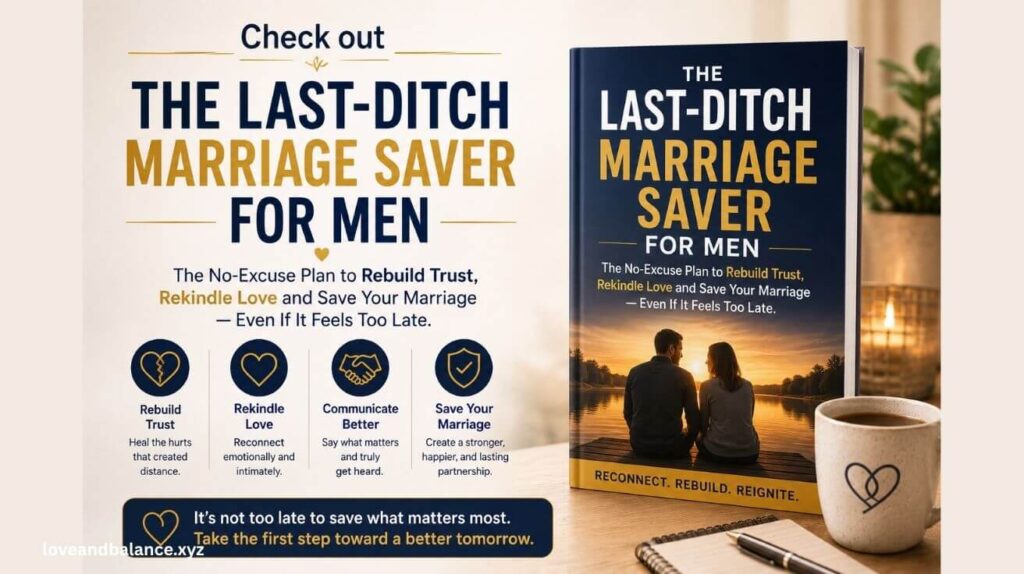
Everything above is aimed at letting go of someone who isn’t meeting you halfway. But if you’re a man whose marriage is wobbling, and the work in front of you is repair rather than release, a structured plan can help you stop reacting and start acting with intention. One resource some readers explore is The Last-Ditch Marriage Saver for Men. Read the details carefully, check that it fits your situation, and remember that no programme can guarantee an outcome, because a marriage always involves two people. Affiliate disclosure: if you purchase through this link, we may earn a commission at no extra cost to you.
Disclaimer: This article is for general education and information only. It is not medical, psychological or legal advice and doesn’t create a therapist-client relationship. Research summaries are simplified and based on the cited studies, whose findings may not apply to every individual. If you’re struggling with your mental health, please consult a qualified professional. If you’re in crisis or at risk of harming yourself or others, contact your local emergency services immediately. Mentions of third-party products or programmes are not endorsements, and results are never guaranteed.
About the author
Written by the editorial team at Love & Balance. Our articles are researched against primary sources, peer-reviewed journals, diagnostic manuals and clinical bodies, and every claim here links to the study it came from. We are not licensed clinicians, and where clinical judgement is needed, we point readers toward it.