

5 Painful Narcissistic Relationship Cycle Stages Explained
By Love and Balance Team | Last reviewed 19 September 2026 | 12-minute read
Quick answer: The narcissistic relationship cycle typically runs through five stages: idealisation (love bombing), devaluation, discard, hoovering and recycle. Each one uses warmth, criticism or withdrawal to keep you anxious and attached. It’s a popular model rather than a formal diagnosis, but it echoes well-studied research on abuse cycles and trauma bonding.
Nobody walks into these relationships hoping to lose their confidence. You walk in because someone made you feel chosen.
Maybe it was the good-morning texts that never missed, or the weekend away planned before your third date. They remembered everything you said and reflected it as if they’d found their missing half. Then, slowly, the temperature dropped, and you were apologising for things you couldn’t quite name.
If that sounds familiar, you’re not gullible. You may have been caught in a loop that researchers, clinicians and survivors describe in different words but recognise instantly. Below, I walk through the five stages, separate solid evidence from internet folklore, and point to safe ways out. You don’t need to diagnose anyone to decide a pattern is hurting you.
What This Cycle Is (and What It Isn’t)
First, some housekeeping, because the terminology trips people up.
Narcissistic personality disorder (NPD) is a formal diagnosis that only a qualified clinician can make. “Narcissistic abuse” is not one. It’s shorthand for a pattern of manipulation and control, often involving someone with strong narcissistic traits. According to StatPearls, estimates of NPD in US community samples range from 0% to 6.2%, and a major US survey (34,653 adults) found a lifetime rate of 6.2%, higher in men (7.7%) than in women (4.8%). Plenty of people act in controlling ways without meeting that bar, and plenty of abusive relationships involve no personality disorder at all.
The cycle has two family trees. The older one comes from psychologist Lenore Walker, who in 1979 described three phases (tension builds, an incident erupts, a honeymoon follows) after interviewing around 1,500 women in violent relationships. The newer, more popular one (idealise, devalue, discard) grew out of clinical and survivor communities. Simply Psychology admits that love bombing and hoovering are popular labels with thin direct research behind them, though the pattern fits wider narcissism studies. I’ll flag where evidence is strong or weak.
Treat every model as a map, not the territory; real relationships blur stages or skip one.
The 5 Narcissistic Relationship Cycle Stages
Writers count three, four or five stages. I use five because the last two are where people stay stuck for years.
Stage 1: Idealisation (Love Bombing)
This is the stage everyone remembers fondly, which is exactly the problem.
What it looks like: Fast, flattering, relentless attention. Constant messages. “I’ve never felt like this” within weeks. Gifts, grand gestures, and talk of moving in or marriage before you’ve met each other’s friends. They share your values, your music, even your wounds.
What’s going on: For someone with strong narcissistic traits, admiration is fuel, and an adoring new partner is premium fuel. A 2017 study of 484 US college students found that love-bombing behaviour, meaning excessive early communication, went hand in hand with narcissistic tendencies, insecure attachment and lower self-esteem. It’s small, self-reported and student-published, so treat it as a clue, not a verdict.
Stronger evidence comes from Stefanie Wurst and colleagues, who ran seven studies with 3,560 participants in total. Narcissism’s short-term romantic appeal came mainly from its “admiration” side (charm, confidence, self-promotion), while the long-term relationship damage came from its “rivalry” side (defensiveness, putting others down). The person who swept you off your feet and the person who later belittled you may be two faces of one trait.
A real-world echo: When Netflix released The Tinder Swindler in 2022, viewers asked how the women fell for it. According to NBC News, they allege extravagant dates and a fast-moving romance before large sums went missing. That was romance fraud, not a narcissism diagnosis, but the playbook of speed and spectacle looks familiar. Intensity isn’t proof of love.
Try this: Slow things down on purpose and watch the reaction. Someone who respects you adjusts. Someone running the cycle sulks, pushes or goes cold.
Stage 2: Devaluation (The Slow Drip)
Nobody announces devaluation. It arrives as a sharper tone, a joke at your expense, a sigh whenever you speak.
What it looks like: Backhanded compliments. Shifting goalposts, so what delighted them last month now irritates them. The silent treatment. Comparisons to exes or “normal” partners. Your wins get shrugged off and your slip-ups get replayed. When you push back, the story flips and you end up apologising. That flip is gaslighting, and it powers this stage.
What’s going on: In Walker’s model, this is the tension-building phase, the walking-on-eggshells stretch. Sociologist Paige Sweet’s 2019 paper in the American Sociological Review, drawing on interviews with domestic abuse survivors, argues that gaslighting isn’t just personal cruelty: abusers lean on social stereotypes, such as the idea that women are irrational, to make a partner distrust her own judgment.
Composite example (an illustration, not a real person): By month eight, Priya was screenshotting conversations to prove what had been said, then deleting them because she felt embarrassed to need proof. A capable adult was outsourcing her grip on reality.
Try this: Keep a private, dated log of what was said and done. It isn’t for a courtroom. It’s for the days you start doubting yourself.
Stage 3: Discard (The Blow-Up or the Freeze-Out)
Discard is when the relationship, or your place in it, is suddenly pulled away.
What it looks like: Sometimes it’s loud: a screaming row, an ultimatum, a breakup by text, a new partner appearing within days. Sometimes it’s a week of ice where you’re punished for a crime nobody will name. Either way, you scramble to win back the person who, not long ago, called you their soulmate. In violent relationships, this is also where Walker’s explosive “acute incident” can land.
What’s going on: The person who idealised you now sees you as a disappointment or a threat to their self-image. Some clinicians link this flip to “splitting”, where people are seen as all good or all bad. You don’t need the theory to know the whiplash is real; many survivors say discard hurts more than an ordinary breakup.
Safety note: If threats or violence have ever featured, many domestic abuse organisations warn that the period around leaving can carry the highest risk. Plan with a trained advocate (numbers are further down) instead of announcing your exit alone.
Try this: Don’t litigate. You can’t argue your way to a fair hearing from someone who benefits from you not getting one.
Stage 4: Hoovering (The “Honeymoon” Return)
The name comes from the vacuum cleaner, and it’s grimly accurate: the aim is to suck you back in.
What it looks like: A heartfelt apology that finally says the right words. Flowers, a surprise trip, a sudden emergency, a 2 a.m. “we need to talk”. Friends carrying messages. Promises of therapy and “getting better”. Cleveland Clinic’s experts make a fair point: the remorse can be genuine. Even so, real regret never justifies controlling someone to stop them leaving.
What’s going on: This is Walker’s honeymoon phase, and it works because it delivers relief. In 1993, Donald Dutton and Susan Painter tested the idea that two ingredients forge an unusually strong bond: a power imbalance, and abuse that alternates with kindness. Their 75 participants had recently left abusive relationships. Six months on, attachment to the ex-partner had fallen by only about 27%, and the abuse pattern and power gap accounted for roughly 55% of the variation in how attached they still felt. That’s a trauma bond. It isn’t weakness. It’s a normal response to unpredictable treatment.
Composite example (an illustration, not a real person): Three weeks after Daniel moved out, the messages began: photos of the kids, a long letter, an offer to “start fresh”. Every line was warm. What he noticed only later was that nothing in it described what had actually happened.
Try this: Judge hoovering by change, not charm. Is there accountability, specifics, months of different behaviour and respect for your “no”? If not, it’s the honeymoon, not the cure.
Stage 5: Recycle (The Loop Tightens)
If you go back, the cycle usually restarts, but rarely at the same speed.
What it looks like: A shorter honeymoon. Criticism arriving sooner. Old grievances returning with interest. Apologies that sound scripted. You stop telling friends how things really are, and you plan your day around their mood.
What’s going on: A Wiley reference entry on Walker’s theory notes that with each rotation the loop can speed up and the harm can grow. Isolation feeds it. During the COVID-19 lockdowns, UN Women warned of a “shadow pandemic”: helpline calls rose up to five-fold in some countries, while in others they fell because women couldn’t safely phone while shut in with the person harming them. When the outside world goes quiet, the cycle loses its witnesses.
Recycling isn’t your failure. Domestic abuse services point out that it often takes many attempts to leave for good.
Try this: Track what’s shrinking: the honeymoon, your circle, your confidence. Those tell you more than any label.
The 5 Stages at a Glance
Stage | What you’ll see | What it does to you |
1. Idealisation | Rapid intensity, flattery, future talk | Builds fast attachment |
2. Devaluation | Criticism, silent treatment, gaslighting | Erodes self-trust |
3. Discard | Sudden coldness, a blow-up or an ending | Triggers panic and self-blame |
4. Hoovering | Apologies, gifts, “emergencies” | Restores hope, deepens the bond |
5. Recycle | Shorter honeymoon, quicker criticism | Makes the loop feel normal |
When It’s More Than a “Difficult Personality”
For years, controlling behaviour without physical injury was treated as private unhappiness. That is shifting. In December 2015, England and Wales made controlling or coercive behaviour in an intimate or family relationship a crime under section 76 of the Serious Crime Act 2015, carrying up to five years in prison, according to the Crown Prosecution Service. The offence targets a pattern rather than a single incident, which is exactly what a cycle is.
In February 2019, the Court of Appeal quashed Sally Challen’s 2011 murder conviction in an appeal where coercive control was central. It’s a painful case, and it doesn’t map neatly onto every narcissistic relationship. But it shows how seriously institutions now take control that leaves no bruises.
7 Questions to Check Whether You’re in the Cycle
This isn’t a diagnostic test. It’s a mirror.
1. Did the relationship feel unusually intense, unusually fast?
2. Do you rehearse sentences so they won’t explode?
3. Do you doubt your own memory of events?
4. Do calm periods feel like relief rather than joy?
5. Have friends or family drifted, or have you pulled away from them?
6. Do you end up apologising even when you started calmly?
7. Do you defend your partner when people who love you voice worry?
Three or more “yes” answers are worth talking through with someone outside the relationship, such as a trusted friend or a therapist familiar with coercive control. Not because I’m labelling your partner, but because you deserve a second opinion from someone who isn’t inside the loop.
6 Ways to Break the Cycle Safely
1. Name the pattern, not the person. Write down what happens, in order. Patterns are easier to see than personalities.
2. Rebuild your reality checks. Tell one trusted person the whole story. Isolation feeds the cycle; witnesses weaken it.
3. Find support that understands abuse. Look for a therapist trained in trauma or coercive control, and start with individual support rather than couples’ sessions.
4. Plan for hoovering before it arrives. Decide in advance how you’ll handle apologies, gifts and “emergencies”: perhaps not at all, perhaps one calm sentence.
5. Stay low-reaction if you can’t leave yet. Some people use “grey rock”: brief, calm, unrewarding to engage with. It’s a coping tool, not a cure, and no substitute for safety planning.
6. Protect the basics. Keep copies of key documents, your own bank access, a charged phone and a bag you could grab. Boring, and essential.
If you’re in danger or just need to talk: In the US, call the National Domestic Violence Hotline on 1-800-799-7233 or text START to 88788. In the UK, the National Domestic Abuse Helpline is 0808 2000 247 (24/7) and the Men’s Advice Line is 0808 801 0327. In India, call the Women Helpline 181, or 112 in an emergency. Elsewhere, use your local emergency number.
Final Thoughts
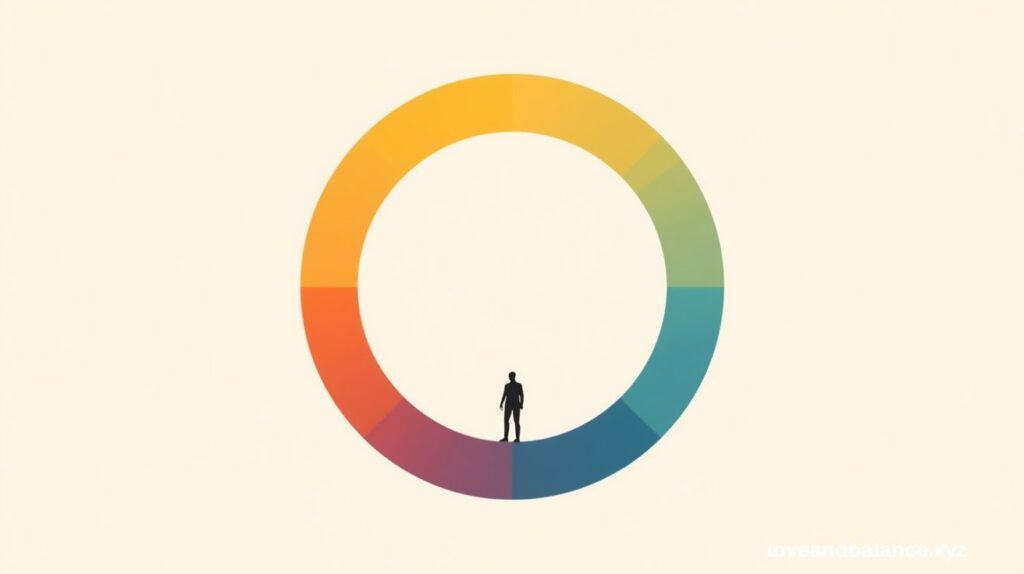
The cycle works because each stage borrows credibility from the others. Devaluation is bearable because you remember idealisation. Discard is terrifying because you’ve felt the warmth. Hoovering feels like proof that the good version was the real one.
You can’t make anyone stop running it. You can decide what to do with what you now know. Start small: name one stage you recognise, tell one person, and take one step that’s about your safety, not their reaction. That’s already a break in the pattern.
5 Painful Narcissistic Relationship Cycle Stages Explained
Frequently Asked Questions
How long does each stage of the narcissistic cycle last?
There’s no research-backed timeline. Idealisation can last weeks or over a year, devaluation can drip on for years, and a discard might take an afternoon or a month. Be wary of blogs quoting exact averages. Watch the pattern, not the calendar.
Is the narcissistic cycle the same as the cycle of abuse?
They overlap but aren’t identical. Walker’s cycle (tension, incident, reconciliation, calm) grew from research with women in violent relationships. Idealise, devalue, discard is a newer, popular framework. Both describe harm alternating with reward, and neither fits everyone.
Do narcissists ever change?
Some people with strong narcissistic traits do change through long-term therapy, but only when they own the problem, which the cycle is built to avoid. Promises during hoovering aren’t evidence. Months of accountable, consistent behaviour are.
Why do I miss someone who hurt me?
Intermittent kindness builds a strong bond. In Dutton and Painter’s study, attachment lingered six months after women left. Missing them doesn’t mean leaving was wrong. It means the bond is real and, with time, distance and support, it usually loosens.
Can women be narcissistic too, and can men be victims?
Yes to both. The major US survey found NPD more common in men (7.7%) than women (4.8%), but narcissistic behaviour and abuse occur in every gender and relationship type. Male survivors often face extra shame; services such as the UK’s Men’s Advice Line exist for them.
Should we try couples therapy?
Where there’s abuse or coercive control, many specialists recommend individual support first, since joint sessions can put you at risk. If things are difficult but safe, a qualified couples counsellor can help. Not sure which applies? Ask a domestic abuse advocate.
What is hoovering and how should I respond?
Hoovering is any attempt to pull you back after distance: apologies, gifts, crises, messages through friends. Many people choose no contact or a calm, boundary-setting reply. If safety is a concern, involve an advocate first.
Keep Reading
Your next step: If this guide left you wondering why the thought of being left feels so unbearable, start with why fear of being left in a relationship shows up. If the pull to go back still feels like gravity, 7 alarming trauma bonding signs and 5 proven steps to break free will help you understand the bond and loosen it. And if you keep asking yourself “am I imagining this?”, read 7 devastating gaslighting examples in relationships and learn to recognise every one. Pick one today and read it with a pen in hand.
For Husbands in a Struggling (but Safe) Marriage
Not every rocky marriage involves narcissism or abuse. Sometimes it’s two exhausted people who have stopped listening. If that’s your situation, with no threats, no fear and no coercive control, a structured guide can give you a starting point. The Last-Ditch Marriage Saver for Men is described by its seller as a 180-page digital guide for husbands, covering communication, rebuilding trust and conflict resolution. The seller advertises a 60-day refund policy, so check the current terms before you buy. If fear, intimidation or control is part of your marriage, please skip this and contact a helpline or a specialist instead, because this guide isn’t designed for that.
See The Last-Ditch Marriage Saver for Men → (affiliate link: we may earn a commission at no extra cost to you)
Disclaimer and Affiliate Disclosure
Affiliate disclosure: This article contains an affiliate link. If you buy through it, we may earn a commission at no extra cost to you. We don’t control the seller’s website, claims or refund terms, and results vary from person to person; nothing is guaranteed.
Educational purposes only: This article is general information, not medical, psychological, legal or safety advice, and it can’t replace a qualified professional. Only a licensed clinician can diagnose a personality disorder, and we are not diagnosing any individual. Composite examples are illustrations, not real people. Statistics come from the studies linked in the text. If you’re in immediate danger, contact your local emergency services
About the Author
Written by the editorial team at Love & Balance. Our articles are researched against primary sources, peer-reviewed journals, diagnostic manuals and clinical bodies, and every claim here links to the study it came from. We are not licensed clinicians, and where clinical judgement is needed, we point readers toward it.
Sources and Further Reading
1. StatPearls: Narcissistic Personality Disorder
2. Cleveland Clinic: The Cycle of Abuse
3. Simply Psychology: Love Bombing Cycle
6. Sweet (2019): Sociology of Gaslighting
9. Shelter for Help in Emergency
10. UN Women: The shadow pandemic
11. Crown Prosecution Service: Coercive behaviour