
Betrayal Trauma in Relationships: 12 Real Signs Your Nervous System Isn’t Lying to You (2026 Guide)
By Love and Balance
Medically-informed, research-backed guide | Updated for 2026 | 14-minute read
Something breaks the first night after you find out. Maybe it was a text thread you weren’t supposed to see, a bank statement that didn’t add up, or a friend who finally said, “I thought you knew.” The details vary, but therapists who specialise in couples work describe a strikingly consistent pattern: the person on the receiving end of the discovery doesn’t just feel sad. They feel unsafe, in their own home, with their own memories, inside their own body.
That reaction has a clinical name: betrayal trauma. It was first formally described in 1991 by University of Oregon psychologist Dr Jennifer Freyd, and her framework helps explain why finding out a partner lied, cheated, hid an addiction, or emotionally checked out can hit your nervous system with the same force as a physical threat, even though nothing “violent” happened in the room.
This guide breaks down what betrayal trauma actually is, the specific, evidence-informed signs to watch for in yourself or someone you love, and what genuinely helps people recover, not the vague “give it time” advice that leaves so many people feeling stuck and unseen. It’s written for the person searching this at 2 a.m. with their chest still tight, not for a textbook.
What Betrayal Trauma Actually Means
Dr Freyd’s betrayal trauma theory describes what happens when someone you depend on for safety, stability, or survival- a parent, an institution, or a romantic partner- significantly violates your trust. The wound isn’t just the act itself (an affair, a lie, a hidden addiction). It’s the fact that it came from the one person your nervous system had marked as “safe.” That’s what separates betrayal trauma from ordinary disappointment: your brain has to reconcile two facts that don’t fit together: this person loves me, and this person hurt me on purpose, and that contradiction is what keeps the wound open.
Betrayal trauma isn’t limited to infidelity. Clinicians apply the concept to financial deception, hidden addictions, chronic gaslighting, emotional affairs, and repeated broken promises around sobriety, fidelity, or honesty. The common thread is dependency: the deeper your reliance on the person, the deeper the destabilisation when trust breaks.
Why It Feels Like PTSD (Even Though It Isn’t an Official Diagnosis)
Clinicians have coined an unofficial term for this experience: Post-Infidelity Stress Disorder, or PISD. It isn’t in the DSM-5 because the manual’s formal PTSD criteria require a threat to life or physical safety, and betrayal, however devastating, doesn’t technically meet that bar on paper.
But the body doesn’t read the DSM. Research on betrayed spouses has repeatedly found that roughly half to sixty per cent display symptoms that closely mirror clinical PTSD: intrusive flashbacks of the discovery moment, hypervigilance, emotional flooding, and avoidance. Studies on infidelity in unmarried couples have found similar patterns, with post-traumatic stress symptoms linked to higher depression, anxiety, and perceived stress in the months that follow. Relationship researcher Dr John Gottman has written extensively about this trauma-like response after his decades of studying couples, describing betrayed partners as “emotionally tortured” in the immediate aftermath, not as an exaggeration, but as an accurate clinical description of what the nervous system is doing.
In other words: if you feel like you’re describing a car accident when you talk about finding out, that’s not dramatic. That’s your amygdala doing exactly what it’s built to do when a survival-level threat shows up disguised as the person you trust most.
What This Looks Like in Real Life
The composite below reflects patterns commonly described in clinical and counselling literature on betrayal trauma. It is not a single real person’s story, but the details are drawn from documented, recurring experiences reported by betrayed partners.
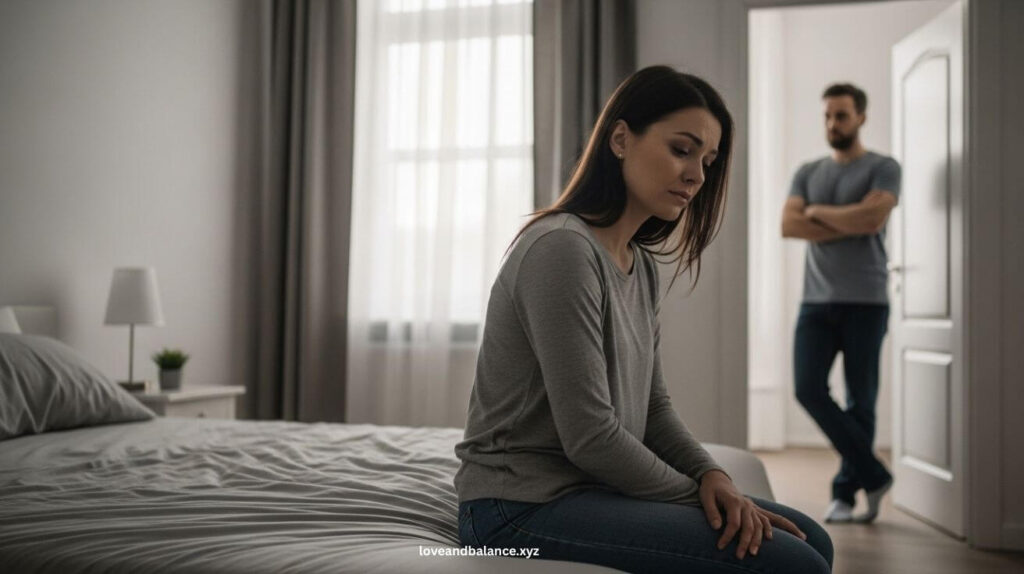
A woman in her mid-thirties describes finding a second phone in her husband’s gym bag. In the weeks that followed, she couldn’t drive past their favourite restaurant without her hands shaking. She started waking at 3 a.m., replaying the exact wording of his explanation, searching for inconsistencies. At work, she’d lose ten minutes mid-task, unable to remember what she’d been doing. She wasn’t “overreacting.” She was showing nearly every hallmark sign researchers associate with betrayal trauma, and understanding that gave her permission to seek real treatment instead of just “waiting for it to pass.”
What’s Actually Happening in Your Brain
Understanding the mechanics can make the symptoms feel less frightening and less like a personal failing. When your brain registers betrayal from an attachment figure, it activates the same threat-response circuitry, the amygdala and the sympathetic nervous system, that would fire if you were facing physical danger. Cortisol and adrenaline flood your system, sharpening memory encoding around the moment of discovery (which is why that scene replays in such vivid, almost cinematic detail) while simultaneously impairing the prefrontal cortex, the part of your brain responsible for rational planning, impulse control, and clear decision-making.
That combination explains a lot of what feels confusing in the aftermath: why you can recall the exact words your partner used down to the syllable, yet can’t remember what you ate for lunch that same day. Why you feel simultaneously hyper-alert and mentally foggy. This isn’t a character weakness; it’s a well-documented, biologically predictable response to attachment-based threat, and it’s precisely why traditional advice like “just think positively” or “let it go” tends to fall flat. You’re not fighting a mood. You’re regulating a nervous system that has, quite literally, been thrown into survival mode by the person it once considered the safest place in the world.
12 Real Signs of Betrayal Trauma
These signs show up in both partners of a relationship affected by betrayal and in people processing betrayal from a parent, close friend, or family member. You don’t need all twelve to be dealing with betrayal trauma; clinicians generally look for a cluster of these lasting more than a few weeks.
1. Hypervigilance, living in “detective mode”
You find yourself scanning receipts, checking location history, re-reading old messages, or noticing tiny shifts in tone that you never used to register. This isn’t paranoia; it’s your threat-detection system trying to prevent the surprise from happening again.
2. Intrusive replaying of the discovery moment
The moment you found out plays on a loop: the exact sentence, the lighting in the room, the smell in the air. Betrayal trauma tends to encode discovery moments the same way combat or accident trauma encodes the event itself, which is why they resurface uninvited.
3. Emotional flooding triggered by small reminders
A song, a restaurant, a specific date on the calendar, or even a stranger who resembles the other person can trigger a wave of panic, rage, or grief that feels disproportionate to the trigger. That gap between the size of the trigger and the size of the reaction is a classic trauma signature.
4. Trouble trusting your own perception
If the betrayal involved lying, minimising, or gaslighting, you may start doubting things you clearly remember or observed. Freyd’s research describes a related phenomenon called “betrayal blindness”, the mind’s tendency to unconsciously downplay a betrayal to preserve a needed relationship, which can leave people questioning their own reality even after the truth is confirmed.
5. Physical symptoms with no other explanation
Nausea, chest tightness, a racing heart, appetite loss or overeating, insomnia, and even shingles-style flare-ups have all been reported by betrayed partners. Trauma is stored physiologically, not just emotionally; the body genuinely reacts as if it’s under threat.
6. Alternating numbness and rage
One hour you feel nothing at all, flat, robotic, going through the motions. The next, a wave of fury arrives out of nowhere. This oscillation between dissociation and flooding is one of the most commonly reported and least talked-about symptoms of betrayal trauma.
7. Obsessive need for details (“story-checking”)
A compulsive need to know every detail of what happened, followed by regret for having asked, followed by needing to ask again. This isn’t a character flaw; the brain is trying to build a coherent narrative because unresolved, fragmented information keeps the threat response switched on.
8. Withdrawal and isolation
Shame, exhaustion, or the fear of being judged can make people quietly pull away from friends, family, or social plans, even though connection is exactly what research shows speeds recovery.
9. A disrupted sense of identity
“Who am I if I’m not the person in this relationship I thought I had?” is one of the most common sentences therapists hear from people working through betrayal trauma. When trust in a partner collapses, it often shakes trust in your own judgment, too.
10. Trouble concentrating or functioning at work
Brain fog, missed deadlines, forgetting basic tasks, or reading the same email five times without absorbing it are common and a direct result of the nervous system diverting resources toward threat monitoring rather than executive function.
11. Compulsive checking behaviours
Constantly tracking a partner’s location, re-checking phones, or needing frequent reassurance texts throughout the day. These behaviours typically aren’t about control; they’re an attempt to regulate an overwhelmed nervous system in real time.
12. Self-blame despite not being at fault
“What did I do wrong?” “Was I not enough?” Even when the responsibility clearly sits with the person who broke trust, betrayed partners frequently internalise blame. This is a well-documented trauma response, not evidence that the self-blame is accurate.
What Actually Helps (According to Research, Not Just Time)
“Time heals” is incomplete advice. Time plus structured, deliberate emotional processing is what the research on affair recovery and trauma treatment actually supports. A few evidence-backed paths forward:
● Trauma-informed individual therapy: approaches like EMDR (Eye Movement Desensitisation and Reprocessing) are specifically designed to help the brain reprocess the intrusive, flashbulb-style memories common in betrayal trauma.
● Couples therapy with a therapist trained in infidelity or attachment repair, but only once the betraying partner has stopped the behaviour and is showing consistent, verifiable transparency. Therapy started too early, without safety, tends to retraumatize the betrayed partner.
● Psychoeducation, simply learning that these reactions are a recognised trauma response (not a personality flaw or an overreaction) reduces shame and self-blame significantly.
● Peer or group support, connecting with others who’ve experienced betrayal reduces the isolation that tends to prolong symptoms.
● Rebuilding a felt sense of safety before rebuilding trust: safety (predictability, transparency, consistency) has to come first; trust is what gets rebuilt slowly on top of it, not the other way around.
If you notice persistent hopelessness, an inability to function in daily life, or thoughts of self-harm at any point in this process, that’s a sign to reach out to a licensed mental health professional or a crisis line in your country right away; betrayal trauma is real. Still, you don’t have to carry it alone or untreated.
Betrayal Trauma in Relationships: 12 Real Signs Your Nervous System Isn’t Lying to You (2026 Guide)
Frequently Asked Questions
Is betrayal trauma a real, diagnosable condition?
Not as a standalone diagnosis in the DSM-5. But the symptom cluster is well documented in clinical and research literature, and many therapists treat it using trauma-focused approaches even without a formal PISD diagnosis, because the symptoms are functionally identical to a trauma response.
How long does betrayal trauma typically last?
There’s no fixed timeline, and anyone promising you an exact number of weeks is oversimplifying a genuinely individual process. Many people notice the most acute symptoms- flashbacks, hypervigilance, sleep disruption- easing within three to six months with consistent support, while a full sense of safety and trust can take a year or longer to rebuild, especially if the relationship continues and both people are actively working on repair rather than just waiting for the discomfort to pass on its own.
Can betrayal trauma happen outside of infidelity?
Yes. Financial deception, hidden addiction, repeated broken promises, chronic lying, and emotional affairs can all trigger the same trauma response, because the core injury is the violation of dependency-based trust, not the specific act itself.
What’s the difference between betrayal trauma and normal heartbreak?
Heartbreak is grief over a loss. Betrayal trauma includes grief, but adds a layer of threat response, intrusive memories, hypervigilance, and a shattered sense of safety, because the pain was caused deliberately by someone the nervous system had marked as safe.
Can a relationship survive betrayal trauma?
Some do, and research on affair recovery suggests couples who engage in structured, transparent, therapist-guided repair have meaningfully better outcomes than those who try to “just move on” without addressing the trauma directly. Survival isn’t guaranteed, and it shouldn’t be treated as the only measure of success; some people heal fully by choosing to leave. But for couples who both genuinely want to rebuild, sustained effort, radical transparency, and professional guidance give the relationship a real chance.
What should I do right after discovering a betrayal?
Prioritise basic physical stability first: sleep, food, and not making major decisions in the first 24 to 48 hours if you can avoid it. Then reach out to a therapist, a trusted support person, or a support group as soon as possible rather than processing it entirely alone.
Related Reading
Betrayal trauma rarely shows up in isolation; it’s often tangled up with trust erosion, emotional unavailability, or a slow loss of closeness long before the discovery itself. These related guides can help you look at the fuller picture:
● If you’re noticing patterns of distance or suspicion building for a while, this breakdown of the 15 signs your partner doesn’t trust you in 2026 (and what actually rebuilds trust, according to research) is a useful next read.
● If betrayal trauma has you questioning whether your partner was ever fully present, this guide to 17 unmistakable signs a man is emotionally unavailable, backed by psychology, can help you tell the difference between a rough patch and a pattern.
● And if you’re trying to figure out whether the relationship can rebuild real closeness after betrayal, this guide on what emotional intimacy actually is, 9 real signs, 6 hidden causes, and 8 ways to rebuild it is worth bookmarking.
If You’re a Man Trying to Save Your Marriage After a Betrayal
Betrayal trauma doesn’t just affect the person who was betrayed; it puts the whole relationship into crisis mode, and many men in this position feel completely out of their depth, unsure what to say, what to fix first, or how to rebuild trust without making things worse. If that’s where you are right now, it’s worth taking a closer look at What Is the Last-Ditch Marriage Saver for Men?, a resource built specifically for men trying to hold their marriage together after a serious breach of trust. It won’t undo the betrayal or replace professional therapy, but it can give you a clearer, more structured starting point than trying to figure it all out alone at 1 a.m.
Disclosure: This article contains an affiliate link. If you click through and make a purchase, we may earn a commission at no additional cost to you. We only recommend resources we believe can genuinely add value; this is not a substitute for licensed therapy or professional mental health treatment, and it is not personalised advice for your specific situation.
About This Guide
This article was researched and written using peer-reviewed and clinically recognised sources on betrayal trauma theory, post-infidelity stress research, and affair-recovery literature, including the foundational work of Dr Jennifer Freyd (University of Oregon) and published research on post-traumatic stress symptoms following infidelity. It reflects general educational information, not a clinical diagnosis. If you recognise these signs in your own life, please consider speaking with a licensed therapist or counsellor who specialises in trauma or relationship recovery.
Sources & Further Reading
● Betrayal Trauma, Definitions & Theory, Freyd Dynamics Lab, University of Oregon
● How Infidelity Causes Post-Traumatic Stress Disorder, Psychology Today
● Infidelity PTSD: Symptoms & How to Cope, Choosing Therapy
● Institutional & Interpersonal Betrayal Research, Jennifer J. Freyd, PhD