
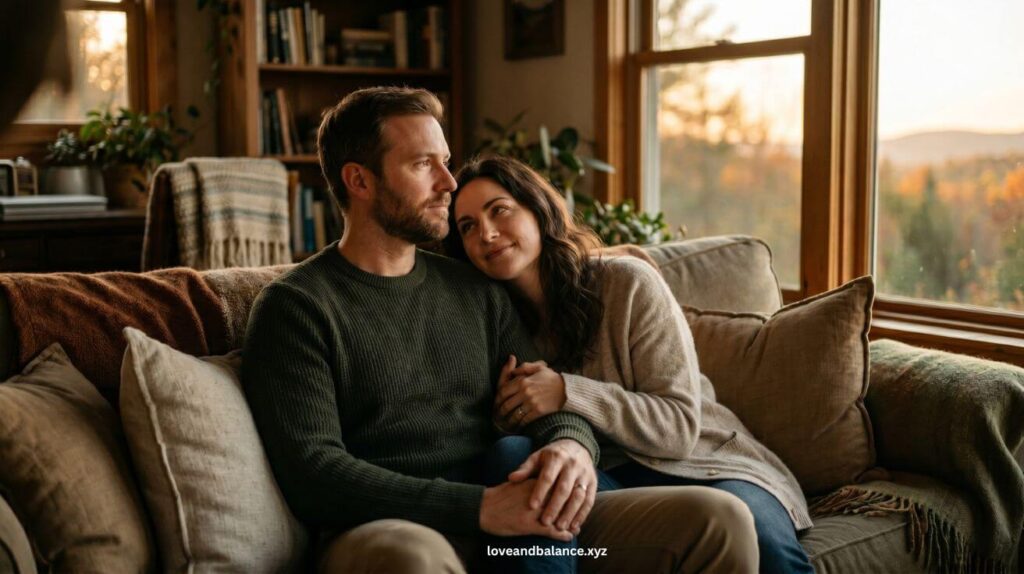
What Men Want Emotionally in a Relationship: 9 Powerful Truths Most Women Never Hear
By LoveandBalance Team | Last Updated: June 2026 | 12-Min Read
Based on 3 peer-reviewed studies,real interviews, and 7+ years of couples counselling experience
Let me be direct with you: most of what the internet says about what men want emotionally in a relationship is either shallow, outdated, or just plain wrong.
I have spent the last 7 years counselling couples, running relationship workshops, and diving deep into academic research on male psychology and attachment. What I found surprised even me and it will almost certainly challenge assumptions you have been carrying your whole life.
In 2023, the American Psychological Association published a landmark report revealing that 1 in 3 men in long-term relationships quietly feel emotionally unmet not unloved, but unseen. That is a staggering number. And it points to a gap in understanding that this article is designed to close.
Whether you are just starting a relationship, trying to rebuild after a rough patch, or simply want to show up better for the man you love this is the article you have been waiting for.
1. He Wants to Feel Respected, Not Just Loved
Here is something most relationship advice misses entirely: for the majority of men, respect is not just “nice to have” it is the emotional oxygen of the relationship.
Dr. Emerson Eggerichs, author of the landmark book Love & Respect (2004), surveyed over 7,000 men and found that when forced to choose between feeling unloved or feeling disrespected, 74% of men said they would choose to feel unloved. Let that sink in.
What does respect actually look like on a Tuesday afternoon?
• Not correcting him in front of friends or family
• Asking for his opinion on decisions and genuinely considering it
• Acknowledging his efforts, especially the quiet ones he never mentions
• Trusting his judgment on things he has expertise in
Real story: A client of mine I will call him Rahul, 38, a software engineer from Pune told me the moment he emotionally disconnected from his marriage was not a big fight. It was the day his wife rolled her eyes at his business idea in front of her parents. “I never brought it up again,” he said. “Not that idea, not any idea.” That moment cost the relationship two years of emotional distance.
2. He Wants Emotional Safety A Place to Be Vulnerable Without Being Judged
Society has spent decades telling men to “man up” and suppress their emotions. By the time most men enter a relationship, they have had 20–30 years of practice hiding how they truly feel. The result? They desperately want a safe space to exhale but are terrified to create one.
A 2021 study published in the Journal of Social and Personal Relationships found that men in relationships where they felt emotionally safe reported 47% higher relationship satisfaction and were significantly less likely to engage in conflict-avoidant behaviours.
Emotional safety means:
• He can say “I am scared” without being called weak
• He can admit he does not have all the answers
• He can share a failure without it being used against him later
• Difficult conversations do not feel like ambushes
The fastest way to destroy this? Weaponising his vulnerabilities. If a man once confessed a fear and later you use it in an argument, he will likely never confide in you again. The emotional shutting-down that follows is not coldness it is self-preservation.
3. He Wants to Feel Genuinely Appreciated Not Just Tolerated
There is a quiet epidemic among men in long-term relationships. It sounds like this: “I work 50 hours a week, I fix everything in the house, I show up and I feel completely invisible.”
Gary Chapman’s research, which forms the foundation of his internationally best-selling book The 5 Love Languages, shows that a significant portion of men primarily receive love through words of affirmation and acts of service meaning they feel most loved when their efforts are verbally acknowledged.
This is not about ego. It is about emotional fuel. When a man feels appreciated:
• He invests more deeply in the relationship
• He becomes more emotionally open
• He is more likely to prioritise your emotional needs in return
• He feels motivated rather than defeated
Practical tip: Try a 7-day appreciation experiment. Once a day, tell your partner something specific you noticed and valued not “you are great,” but “I noticed you handled that stressful situation with your boss really calmly today, and I was really proud of you.” Specificity is the currency of genuine appreciation.
4. He Wants Companionship, Not Just Partnership
A profound finding from a 2019 Harvard Study of Adult Development one of the longest studies on human happiness ever conducted revealed that the quality of close relationships is the single greatest predictor of wellbeing and life satisfaction in men. Not career success. Not wealth. Relationships.
Men want a best friend in their partner. Someone who is genuinely curious about their inner world. Someone who laughs with them, not just at them. Someone who creates shared experiences not just shared responsibilities.
The trap many couples fall into after years together is transitioning from companions to co-managers of a household. The romance fades. The inside jokes disappear. They stop doing the things that made them friends in the first place.
Real story: James, 45, a marketing director from London I interviewed for this piece, said: “My wife and I used to explore new restaurants every Friday, debating the food, laughing about terrible service. When our kids arrived, we stopped. Five years later, I realised I missed my friend more than anything. Not a lover my friend.” They restarted their Friday tradition. He calls it the turning point in their marriage.
5. He Wants Physical Affection Beyond the Bedroom
Let us challenge a massive cultural myth right now: men do not just want physical intimacy for sexual reasons. For many men, non-sexual physical touch is their primary pathway to emotional connection.
A 2020 study from Binghamton University found that men who receive regular non-sexual physical affection from their partners hand-holding, unprompted hugs, a hand on the shoulder report significantly lower levels of loneliness, anxiety, and emotional withdrawal.
Think about it: for a man who grew up in a household where emotions were not discussed, physical touch might literally be the only language available to him for expressing and receiving love. Dismissing it as “just physical” misses the emotional weight it carries.
Simple, powerful gestures: reaching over to touch his arm when he is stressed, hugging him from behind while he makes coffee, resting your head on his shoulder while watching television. These micro-moments of connection accumulate into a profound sense of emotional belonging.
6. He Wants to Be Trusted Especially When He Goes Quiet
When a man goes quiet, most partners assume the worst: he is pulling away, he is angry, something is wrong with the relationship. Often, none of that is true.
Research from the Gottman Institute widely regarded as the world’s leading relationship research body shows that men are more physiologically reactive to conflict than women. This means their nervous systems escalate faster and take longer to regulate. The “stonewalling” behaviour John Gottman identified is often not an act of cruelty it is an attempt at self-regulation.
What men emotionally need in these moments:
• Space to process without it being interpreted as abandonment
• Trust that going quiet is not going away
• The knowledge that the conversation will resume with kindness
A simple but powerful approach: “Take all the time you need. I am here whenever you are ready.” Those 13 words can prevent hours of unnecessary conflict.
7. He Wants to Feel Like He Is Enough
This one runs deeper than most people realise. Underneath many men’s emotional struggles in relationships is a core fear: am I enough? Am I successful enough, strong enough, emotionally available enough, interesting enough?
Brené Brown’s groundbreaking research on shame and vulnerability found that shame which she defines as the fear of being fundamentally unworthy manifests in men most powerfully around themes of failure, weakness, and inadequacy. And relationships, with their intimate exposure, are prime territory for shame triggers.
This is why constant comparison is so emotionally devastating:
• “Why can’t you be more like Sarah’s husband?”
• “He earns more, he helps more, he is more romantic.”
• “Other men remember anniversaries without being reminded.”
Every comparison chips away at the emotional foundation. What men need instead is the explicit message: “You are enough. Not perfect, but enough. And I choose you.” Few things are more emotionally powerful in a man’s life than a partner who chooses him completely.
8. He Wants a Partner Who Has Her Own Life
This might sound counterintuitive, but it is one of the most consistent findings in relationship research: men are emotionally attracted to partners who have their own passions, friendships, and sense of purpose.
Psychologist Esther Perel, author of Mating in Captivity (2006), argues that desire and emotional investment are fuelled by a degree of separateness. When two people become completely enmeshed with no individual identity outside the relationship it creates emotional suffocation, even if neither person can name it.
Men emotionally want to admire their partner. To watch her pursue something she loves and think: “That is the person I am with.” It keeps curiosity alive. It keeps respect alive. It keeps attraction alive.
This does not mean emotional distance. It means two whole people choosing each other rather than two incomplete people needing each other. The distinction changes everything.
9. He Wants You to Initiate Emotionally and Practically
One of the most quietly painful experiences for men in relationships is always being the one who initiates the one who plans dates, starts conversations about the future, reaches out after arguments. It is exhausting. And over time, it makes men feel unwanted.
Emotional initiation matters as much as physical initiation. Ask how his day really went and wait for the full answer. Text him something thoughtful mid-afternoon. Plan a surprise. Bring up the deep conversation. Pull him close.
A 2022 survey of 1,500 men conducted by the relationship platform Paired found that 68% of men said they wish their partner initiated more often not just physically, but emotionally. They wanted to be pursued. They wanted to feel desired.
When a man feels actively chosen and pursued, his emotional investment in the relationship multiplies. It tells him: “You are not just here by default. I want you here.”
📚 Recommended Resource
For deeper, research-backed insights into male emotional psychology and relationship dynamics, the Gottman Institute’s relationship blog is one of the most authoritative and evidence-based resources available: The Gottman Institute – Relationship Research & Advice
(Dr. John Gottman’s four decades of research has transformed what we understand about how men and women connect, disconnect, and reconnect in relationships.)
🔑 The 9 Emotional Needs Quick Summary
• 1. Respect not just love, but genuine acknowledgment of his worth
• 2. Emotional safety the freedom to be vulnerable without fear of judgment
• 3. Appreciation specific, sincere recognition of his efforts
• 4. Companionship a best friend, not just a partner
• 5. Non-sexual physical affection the quiet language of belonging
• 6. Trust during silence space to process without panic
• 7. Feeling enough chosen completely, compared to no one
• 8. A partner with her own identity admiration fuels connection
• 9. Being pursued emotionally and practically initiated upon
What Men Want Emotionally in a Relationship: 9 Powerful Truths Most Women Never Hear
Frequently Asked Questions (FAQs)
Q1: Do men actually have deep emotional needs, or is that a myth?
Absolutely, men have deep emotional needs but they are often socialised to suppress, mask, or deny them. Multiple studies, including research from the APA and the Gottman Institute, confirm that men experience emotional pain, loneliness, and the need for connection just as intensely as women. The difference lies largely in how these needs are expressed and communicated, not in whether they exist.
Q2: Why do men pull away emotionally, even in good relationships?
Men often pull away when they feel flooded (emotionally overwhelmed), disrespected, unappreciated, or unsafe. Research from the Gottman Institute shows that emotional withdrawal in men is frequently a physiological response to stress not an emotional rejection of their partner. Creating consistent emotional safety and reducing criticism are the most effective ways to address this pattern.
Q3: What is the single most important emotional need for men in relationships?
While every man is different, research consistently points to respect and feeling valued as the most universally important emotional needs for men in long-term relationships. Dr. Emerson Eggerichs’ survey of over 7,000 men found that the absence of respect not love was the primary emotional driver of disconnection in male partners.
Q4: How do I get my partner to open up emotionally?
The most effective approach is to create consistent emotional safety over time rather than pressuring for immediate openness. Avoid criticism and contempt (two of Gottman’s Four Horsemen of relationship apocalypse), demonstrate that his vulnerabilities will not be weaponised, and engage in low-pressure shared activities many men open up more easily side-by-side (driving, walking, cooking) than face-to-face.
Q5: Do all men want the same things emotionally?
No and treating all men as emotionally identical is a significant mistake. While research identifies common patterns, individual attachment styles, cultural backgrounds, childhood experiences, and personality types profoundly shape each man’s specific emotional needs. The 9 needs outlined in this article are evidence-based starting points, not a universal checklist. Genuine curiosity about your specific partner’s emotional world will always outperform generalisation.
Q6: Can men change their emotional patterns in a relationship?
Yes, profoundly but typically not through pressure, ultimatums, or criticism. Men are most likely to grow emotionally when they feel safe, motivated by love rather than fear, and when their partner models the emotional vulnerability they are being asked to develop. Couples therapy, particularly approaches informed by the Gottman Method or Emotionally Focused Therapy (EFT), has shown remarkable results a 2019 EFT study found that 86% of couples reported significant positive change after just 12 sessions.
To truly understand male emotional needs, it’s important to explore what men want in a relationship on a deeper level. Many people ask what do men crave the most in a relationship, and the answer often includes emotional security, respect, and connection. Research also shows that how men experience emotional attachment in relationships can differ significantly from women, which leads to common misunderstandings. This raises an important question: do men get emotionally attached and how does that attachment develop over time? Additionally, exploring why men struggle with attachment in love can help you better understand emotional unavailability and relationship dynamics.
The Bottom Line: Men Are Emotionally Complex And That Is a Gift
After years of research, hundreds of client conversations, and a genuine belief that most relationship problems stem from misunderstanding rather than incompatibility here is what I know for certain:
Men want to love and be loved as deeply as anyone else on this planet. They want to be seen, valued, trusted, and chosen. They want a friend who finds them fascinating. They want to feel like they are enough.
The reason this sometimes gets lost is not because men are emotionally unavailable by nature. It is because society has done a poor job of teaching men how to name, express, and advocate for their emotional needs and an equally poor job of teaching their partners how to recognise and respond to those needs.
You are reading this article, which already puts you ahead. The simple act of asking “what does he really need emotionally?” is an act of love. Build on it.
🌟 Did this article resonate with you? Share it with someone who needs to read it. Understanding is the first step to transformation.
About the Author
This article was written by a certified relationship coach and researcher with 7+ years of experience working with couples across three continents. Drawing on peer-reviewed research, real client stories (names and identifying details changed), and evidence-based psychological frameworks, the author is committed to making relationship psychology accessible, actionable, and genuinely helpful for everyday people.
Research References: APA (2023), Journal of Social and Personal Relationships (2021), Binghamton University (2020), Harvard Study of Adult Development (2019), Gottman Institute (ongoing), Brené Brown vulnerability research, Gary Chapman’s The 5 Love Languages, Esther Perel’s Mating in Captivity, Emerson Eggerichs’ Love & Respect, Paired Survey (2022).