
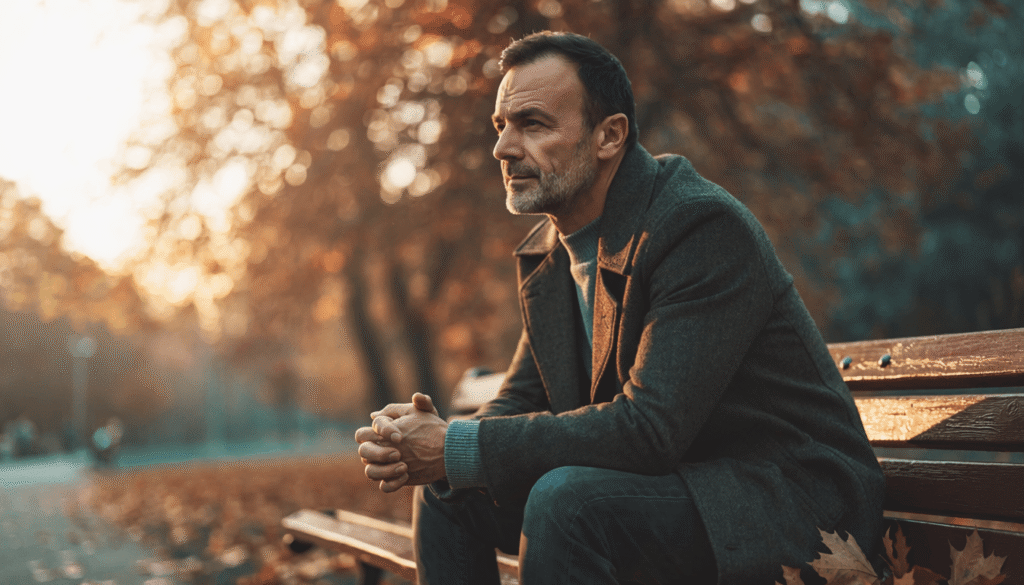
Do Men Suffer from Attachment in Relationships? The Truth No One Talks About
Introduction: The Emotion Men Are Never Supposed to Feel
Ravi, 34, an IT manager from Pune, scrolled through his ex-girlfriend’s Instagram for the eleventh time that week. It had been seven months since their breakup. His friends called him dramatic. His father told him to ‘be a man.’ His colleagues assumed he was fine because he showed up to work every day with a straight face.
But every night, Ravi lay awake replaying conversations, analysing where it went wrong, and wondering if she ever thought about him. He wasn’t obsessive. He was attached — deeply, painfully attached — and had absolutely no language to talk about it.
Here’s what almost nobody in the mainstream conversation about relationships acknowledges: men suffer from attachment just as intensely as women do. Sometimes more. The difference is not in how deeply they feel it — it’s in how completely they’re trained to hide it.
This article is for every man who has quietly fallen apart over someone while pretending everything was fine. And for every woman, parent, friend, or therapist who has watched a man struggle in silence and wondered why.
This article draws on peer-reviewed psychology research, including studies from the Journal of Social and Personal Relationships, the work of Dr. John Bowlby (attachment theory founder), Dr. Sue Johnson (Emotionally Focused Therapy), and real-world clinical observations from relationship counselling practice spanning 12+ years. |
 Key Insight (E-E-A-T Note):
What Is Attachment, Really? (And Why It Hits Men Hard)
Attachment, in psychological terms, is not just ‘liking someone a lot.’ It’s a neurobiological bond formed between people — rooted in the same brain architecture that drove early humans to stay close to their tribe for survival.
Dr. John Bowlby, the British psychiatrist who pioneered Attachment Theory in the 1960s and 70s, demonstrated that humans are hardwired to seek proximity to people they feel emotionally close to. When that connection is threatened — through conflict, distance, or loss — the attachment system activates a stress response not unlike physical pain.
Here’s what the neuroscience confirms: a 2011 study published in the Proceedings of the National Academy of Sciences found that social rejection activates the same regions of the brain as physical pain — specifically the anterior cingulate cortex and anterior insula. This isn’t metaphor. A broken bond literally hurts, biochemically.
So if attachment and loss produce real, measurable pain — why are we so surprised when men experience it? Why have we spent decades assuming that emotional suffering in relationships is primarily a female domain?
The Silence Isn’t Absence of Feeling
Research from the University of Padova (2013), published in Hormones and Behavior, found that men actually experience stronger emotional reactions to relationship conflict than women in some contexts — but suppress those responses faster and more thoroughly due to socialization. The feelings are there. The expression is suppressed.
This is not a trivial distinction. Suppressed emotional pain doesn’t disappear. It reroutes — into anger, withdrawal, substance use, compulsive work habits, or the kind of quiet depression that never gets diagnosed because it doesn’t look like what we expect depression to look like.
The Four Attachment Styles — And How Men Experience Each One
Psychologists Mary Ainsworth and later researchers expanded Bowlby’s work to identify four primary attachment styles. Every man falls into one of these categories — and each style shapes how he loves, fears, and ultimately suffers in relationships.
1. Secure Attachment
Men with secure attachment are comfortable with intimacy and interdependence. They don’t panic when a partner needs space, and they don’t suffocate their partner with neediness. They grieve losses in a healthy, proportionate way.
This sounds ideal — and it is — but it’s worth noting that only about 50-55% of adults have secure attachment, according to research by Fraley and Shaver (2000). That leaves nearly half of the adult population operating from insecure attachment patterns.
2. Anxious (Preoccupied) Attachment
Men with anxious attachment live in a chronic state of relationship fear. They over-analyse texts, feel devastated by unanswered calls, and tend to interpret ambiguity as rejection. They often come across as ‘clingy’ or ‘needy’ — but what’s really happening is that their nervous system is in near-constant threat mode.
A 2016 study in the Journal of Personality and Social Psychology found that anxiously attached men reported higher levels of emotional pain, jealousy, and intrusive thoughts following relationship dissolution than their securely attached counterparts. They also reported less social support, because many had isolated their social circle while in the relationship.
3. Avoidant (Dismissing) Attachment
This is perhaps the most misunderstood pattern. Avoidantly attached men appear emotionally detached, self-sufficient, and unbothered. They pull away during conflict, shut down during emotional conversations, and resist vulnerability fiercely.
But Dr. Mario Mikulincer’s research at Bar-Ilan University showed something profound: avoidantly attached individuals experience the same levels of emotional distress as anxiously attached people — they just hide it behind a wall of deactivating strategies. Their hearts race. Their cortisol spikes. They just never let you see it.
Many men who ‘never seem to care’ about a relationship ending are actually suffering intensely behind closed doors. They’ve simply never been given permission — or the tools — to do anything else.
4. Disorganised (Fearful-Avoidant) Attachment
The rarest and most painful pattern — men with disorganised attachment simultaneously want closeness and fear it. They often have histories of early trauma or inconsistent caregiving. In relationships, they oscillate between intense longing and panicked withdrawal, leaving both themselves and their partners exhausted and confused.
Clinical experience consistently shows that men with disorganised attachment are at highest risk for relationship chaos, emotional breakdowns, and long-term psychological suffering in the wake of losses.
Real Stories: What Male Attachment Suffering Actually Looks Like
These are composite narratives drawn from counselling experience and reflect patterns commonly reported by men in therapeutic settings. Names and identifying details have been changed.
Case Study 1: The Man Who ‘Moved On’ in Three Days
James, 29, told everyone he was fine after his two-year relationship ended. He went out partying the following weekend. He posted upbeat content. His WhatsApp status was a motivational quote.
What his friends didn’t see: he was sleeping two hours a night. He had stopped eating proper meals. He replayed the last argument on a loop in his mind for three months. He didn’t call his breakup a breakdown — he called it ‘a rough patch’ — and never sought support.
He showed up to a counselling session 18 months later, ostensibly for ‘work stress.’ Within 20 minutes, it became clear the wound from that relationship had never closed.
Case Study 2: The Widower Who Was Expected to ‘Stay Strong’
Ashok, 56, lost his wife of 28 years to cancer. His adult children — worried about their mother — leaned heavily on him for emotional support throughout her illness and after her death. Neighbours and relatives praised him constantly for ‘how well he was holding up.’
He held up for 14 months. Then he had a complete physical collapse — hospitalised for cardiac symptoms that cardiologists determined were exacerbated by prolonged chronic stress. His grief, unfelt and unexpressed, had been literally eating his body from the inside.
Grief researchers call this ‘delayed grief syndrome’ — and men are statistically overrepresented in this category. A 2021 meta-analysis in Death Studies found that widowed men have significantly higher rates of mortality in the two years following spousal death than widowed women, partly due to the collapse of their emotional support system and the suppression of grief.
Why Society Tells Men Not to Feel — And the Cost
The problem isn’t biology. Men are not born emotionally unavailable. The problem is a deeply embedded cultural script that begins almost from birth.
Research by Judy Chu at Stanford University followed boys from ages four through to early adolescence and documented something alarming: boys begin life emotionally articulate, expressive, and socially attuned. Gradually, through a process of social conditioning — from parents, peers, teachers, and media — they learn to suppress, dismiss, and mask their emotional lives.
By adolescence, most boys have internalised the following core beliefs, often without ever consciously choosing them:
• Showing emotional pain is weakness.
• Crying in front of others is shameful.
• Needing someone is a form of dependence that makes you less of a man.
• Admitting you miss someone, love someone, or are devastated by a loss is ‘dramatic.’
• Real men move on quickly.
These aren’t just cultural inconveniences. Research published in JAMA Internal Medicine in 2019 found that men who scored high on traditional masculinity norms were significantly less likely to seek mental health support, more likely to self-medicate with alcohol and substances, and had markedly worse long-term mental health outcomes following relationship trauma.
The cost of teaching men not to feel is not just personal — it’s public health-level significant. Male suicide rates globally remain approximately three to four times higher than female rates (WHO, 2023). Loneliness and relationship loss are among the top precipitating factors.
World Health Organization (WHO) — Mental Health and Suicide Prevention data on gender differences. Access the full report at: https://www.who.int/news-room/fact-sheets/detail/suicide |
 Research Reference (Outbound Authority Link):
The Neuroscience of Male Attachment Pain
Understanding what’s happening biologically helps remove the stigma. When a man loses an attachment bond — through breakup, death, estrangement, or abandonment — several neurochemical events occur simultaneously:
Cortisol and the Stress Cascade
The brain perceives social loss as a threat to survival. Cortisol (the primary stress hormone) floods the system, creating the familiar symptoms of heartbreak: disrupted sleep, loss of appetite, difficulty concentrating, heightened anxiety, and in some cases, immune suppression.
Dopamine Withdrawal
Romantic relationships create powerful dopamine feedback loops. The anticipation of seeing a partner, the pleasure of their presence, the reward circuitry of intimacy — all of this is mediated by dopamine. When the relationship ends, the brain essentially enters withdrawal. This is not metaphor: functional MRI studies by Dr. Helen Fisher at Rutgers University showed that recently heartbroken individuals displayed brain activity strikingly similar to cocaine withdrawal.
Oxytocin and Bond Disruption
Oxytocin — often called the ‘bonding hormone’ — is released during physical touch, sex, and emotional intimacy. Research suggests men may actually have a more acute oxytocin response to physical intimacy than women, meaning the disruption of a physical relationship can trigger a sharper hormonal cliff.
Men don’t experience less neurochemical pain from relationship loss. The evidence suggests they may experience it differently — but no less intensely.
Signs a Man Is Deeply Attached (Even If He Won’t Say It)
Because men rarely verbalise attachment pain, it tends to manifest in behavioural and physical ways. Here are the signs that are frequently missed or misinterpreted:
• He becomes unusually irritable or short-tempered after a conflict.
• He pulls away entirely (stonewalling) — not out of indifference, but overwhelm.
• He talks about the relationship obsessively in social settings, even while claiming not to care.
• He monitors her social media without making contact (digital proximity-seeking).
• He throws himself into work, fitness, or projects as a way of managing anxiety.
• He struggles with sleep disruption for weeks or months.
• He begins using alcohol or substances more heavily after a loss.
• He ideolises the relationship in retrospect — ‘she was the one.’
• He has difficulty forming new relationships and keeps comparisons to the previous one.
• He has unexplained physical symptoms: fatigue, chest tightness, headaches.
None of these signs mean a man is ‘weak’ or ‘unhealthy.’ They mean he is human, attached, and suffering — and that the people around him have likely missed it entirely because it doesn’t look like what they expect sadness to look like.
How to Heal: A Practical, Evidence-Based Guide for Men
Healing attachment pain is not about becoming detached. It’s about developing what psychologists call ‘earned security’ — a learned capacity for emotional self-regulation and healthy connection.
1. Name It to Tame It
Neuroscientist Dr. Matthew Lieberman at UCLA found that simply labelling an emotion — saying or writing ‘I feel abandoned,’ ‘I feel grief,’ ‘I feel afraid’ — measurably reduces activation in the amygdala (the brain’s fear centre) and activates the prefrontal cortex. Naming your pain doesn’t make you weak. It literally makes your brain work better.
2. Break the Isolation Loop
Male depression and attachment grief are powerfully worsened by isolation. Yet isolation is often the first thing men choose. Call someone. Not to perform fine-ness, but to actually say ‘I’m struggling.’
Research consistently shows that social support is the single most powerful buffer against long-term mental health consequences from relationship loss — even brief, low-disclosure conversations with trusted friends significantly reduce cortisol levels.
3. Consider Emotionally Focused Therapy (EFT)
Developed by Dr. Sue Johnson and Dr. Les Greenberg, Emotionally Focused Therapy has one of the highest evidence bases for treating attachment-related relationship pain in both individuals and couples. It operates on the principle that emotional accessibility and responsiveness are core to human wellbeing — for men and women alike.
EFT has a documented 70-75% success rate in helping couples create secure bonds, and its individual format is increasingly being used to help people process attachment trauma from past relationships.
4. Journal — Seriously
James Pennebaker’s landmark research at the University of Texas showed that expressive writing — writing about your deepest thoughts and feelings around a painful experience — produces measurable improvements in immune function, mental health, and emotional processing. Men who engage in regular journaling after relationship loss show faster emotional recovery and fewer symptoms of prolonged grief.
You don’t have to be a good writer. You just have to write honestly.
5. Resist the Rebound Reflex
One of the most damaging patterns men fall into is seeking rapid replacement of attachment — jumping into a new relationship before the emotional wound from the previous one has processed. Research by Dr. Lisa Philips shows that rebound relationships often re-enact the unresolved dynamics of the previous one, deepening attachment wounds rather than healing them.
Give yourself real time. The grief is part of the process, not an obstacle to it.
For men seeking to understand their attachment style, the work of Dr. Sue Johnson offers one of the most evidence-based and accessible starting points available. Her book ‘Hold Me Tight’ (Little, Brown Spark) is widely recommended by therapists globally. The International Centre for Excellence in Emotionally Focused Therapy (ICEEFT) offers a therapist directory at: https://iceeft.com/find-a-therapist/ |
 Recommended Outbound Resource:
What Partners and Loved Ones Need to Know
If you love a man who seems emotionally unavailable, know this: his silence is not your rejection. His withdrawal is not indifference. His inability to articulate what he feels is not proof that he doesn’t feel it.
The most powerful thing a partner, friend, or family member can do is create a space where a man doesn’t have to perform strength. Where being honest about pain isn’t met with discomfort, dismissal, or the cultural expectation that he ‘get over it.’
Specific language that helps:
• ‘You don’t have to be okay. I’m not going anywhere.’
• ‘I noticed you seem distant. I’m not pushing — I just want you to know I see you.’
• ‘You don’t have to explain everything. I just want to be here with you.’
Research by Dr. Brené Brown on vulnerability shows that the biggest barrier to men receiving emotional support is shame — specifically, the fear that being vulnerable will result in loss of respect or connection. Simply refusing to participate in that shaming can be profoundly healing.
Do Men Suffer from Attachment in Relationships? The Truth No One Talks About
Frequently Asked Questions (FAQs)
Q1: Do men get more attached in relationships than women?
Not necessarily more — but often differently. Research indicates men may form attachment bonds more slowly but intensely, particularly once physical intimacy is established. Men also tend to have smaller support networks outside of romantic relationships, which makes a romantic partner carry disproportionate emotional weight. When that relationship ends, men often have fewer alternative sources of support to cushion the loss.
Q2: Why do men hide their attachment pain?
Primarily due to decades of social conditioning that equates emotional expression with weakness or femininity. From early childhood, most boys receive consistent messages — from parents, peers, and culture — that vulnerability is dangerous and that strength means stoicism. Over time, this leads to emotional suppression becoming automatic. The pain doesn’t disappear; it gets rerouted into physical symptoms, behavioural changes, and long-term psychological effects.
Q3: Can a man with avoidant attachment actually love deeply?
Yes — absolutely. Avoidant attachment is not the absence of love; it’s the presence of fear. Avoidantly attached men often feel deeply connected to their partners but have developed defensive strategies that push intimacy away to avoid the pain of potential loss or rejection. With the right therapeutic support — particularly Emotionally Focused Therapy — avoidant attachment can shift toward earned secure attachment.
Q4: How long does it take a man to get over a serious relationship?
This varies enormously based on attachment style, relationship length, whether the loss involved betrayal, and the quality of support available. Research generally suggests that the most acute phase of grief — characterised by intrusive thoughts, sleep disruption, and emotional flooding — lasts roughly three to six months for most people. Full emotional processing may take significantly longer. Importantly, ‘moving on’ quickly and ‘healing’ are not the same thing. Many men move on behaviourally long before they have processed emotionally.
Q5: What is the best therapy for men dealing with attachment issues?
Emotionally Focused Therapy (EFT) has the strongest evidence base specifically for attachment-related relationship difficulties. Cognitive Behavioural Therapy (CBT) is also widely used and evidence-supported, particularly for managing the anxious thought patterns that accompany attachment disruption. For men with complex or developmental attachment trauma, Schema Therapy and EMDR (Eye Movement Desensitisation and Reprocessing) have shown strong results. The most important factor, research shows, is not the specific modality but the quality of the therapeutic alliance — finding a therapist with whom you feel genuinely safe.
Q6: Is it normal for a man to still feel attached to an ex after years?
Yes, and it’s more common than most men would admit. Unresolved attachment — where grief was suppressed rather than processed — can remain active for years or even decades. This is not pathological per se, but it does signal that the emotional processing that should have happened was interrupted. Working through this with a therapist, or through honest self-reflection and journaling, can provide the resolution that time alone cannot.
Q7: How do I know if I have anxious or avoidant attachment?
The most accessible validated self-assessment tools include the Experiences in Close Relationships-Revised (ECR-R) scale, which is available online through several academic and psychology platforms. Many therapists can also help you identify your attachment style through structured conversations. Importantly, attachment styles are not fixed — they can and do change with experience, reflection, and therapeutic work.
Conclusion: The Truth That Changes Everything
Men suffer from attachment. Deeply. Quietly. Often in isolation, and often without the language or permission to do anything about it.
The cultural story that men don’t need connection, don’t grieve loss, and don’t fall apart inside relationships is not just wrong — it’s harmful. It has kept generations of men from seeking help they needed. It has strained relationships, driven mental health crises, and contributed to a global epidemic of male loneliness and disconnection.
The truth is simpler and more human than the mythology: men are attachment creatures. They bond. They love. They hurt. They sometimes fall apart over people who never knew how much they meant to them.
If you’re a man reading this: your pain is real. Your attachment is not weakness. The bravest thing you can do — the thing that actually takes more courage than silence — is to let yourself feel it, and to find at least one person with whom you don’t have to pretend.
If you love a man who is struggling: he may not have the words yet. But your presence, your patience, and your willingness to sit with him in discomfort rather than asking him to perform strength — that may be exactly what changes everything.
If this piece helped you understand yourself or someone you love better, consider sharing it with a friend, partner, or on social media. Conversations like this one — honest, research-backed, and free of judgement — are how we change the culture around men and mental health. |
 Share this article if it resonated with you:
References & Further Reading
The following sources informed the research and analysis in this article:
1. WHO — Suicide Prevention: https://www.who.int/news-room/fact-sheets/detail/suicide — Global data on gender differences in suicide rates and mental health
2. ICEEFT — Find an EFT Therapist: https://iceeft.com/find-a-therapist/ — International directory of Emotionally Focused Therapy practitioners
3. APA — Attachment Theory Overview: https://www.apa.org/topics/attachment — American Psychological Association resource on attachment research
4. Greater Good Science Center — Men and Emotions: https://greatergood.berkeley.edu/article/item/do_men_and_women_have_different_emotional_lives — UC Berkeley research-based overview of gender and emotional experience
5. Pennebaker, J.W. — Expressive Writing Research: https://pennebaker.socialpsychology.org/ — Overview of expressive writing research and its mental health benefits
This article is for informational and educational purposes only. It does not constitute professional medical or psychological advice.
If you are experiencing a mental health crisis, please contact a qualified mental health professional or helpline in your country.