
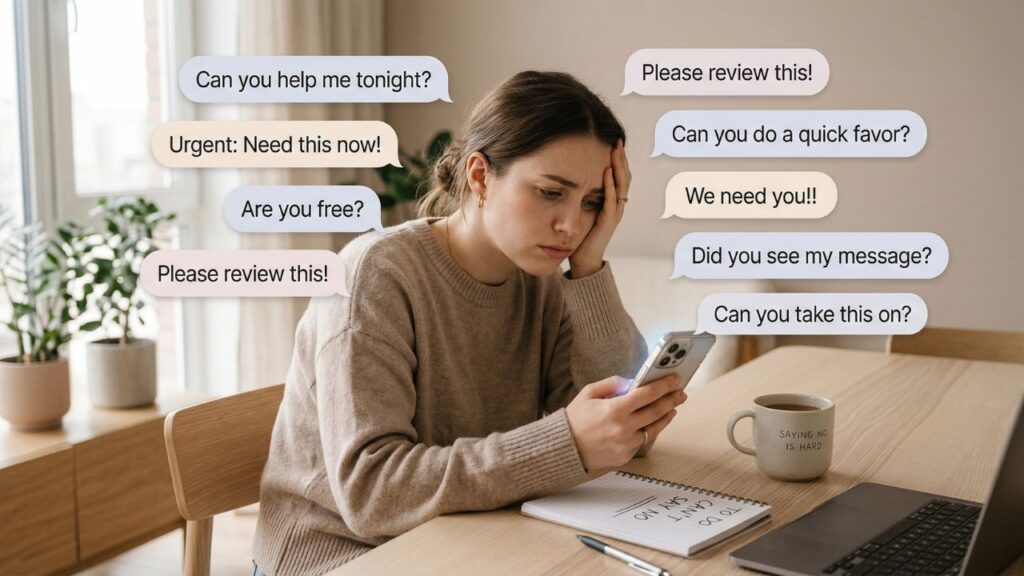
Signs You’re a People Pleaser (And How to Finally Stop)
You say yes when every part of you wants to say no. You apologise before you’ve even done anything wrong. You check in constantly — did they seem upset? Did I say the wrong thing? — even when everything was fine.
If this sounds familiar, you might be a people pleaser. And it’s costing you more than you realise.
People-pleasing isn’t kindness. It’s fear dressed up as niceness — and recognising it is the first step to getting your life back.
What Is People-Pleasing, Really?
People-pleasing is the pattern of consistently putting other people’s comfort, approval, and needs above your own — even when doing so hurts you.
It’s not the same as being generous or thoughtful. The difference is in the driver:
Generosity comes from a full heart and free choice
People-pleasing comes from anxiety and the need for approval
Most people pleasers aren’t even aware they’re doing it. It feels like just “being a good person.” But underneath, there’s a quiet, constant fear: If I don’t keep everyone happy, something bad will happen.
9 Signs You’re a People Pleaser
1. You apologise constantly — even when you’ve done nothing wrong. “Sorry to bother you,” “sorry for asking,” “sorry for existing.” If apologies flow out of you automatically, it’s a sign you’ve been trained to shrink yourself.
2. You struggle to say no — even to things you really don’t want to do. Instead of declining, you make excuses. You cancel at the last minute. You agree and then dread it for days. The direct “no” feels too dangerous.
3. You change your opinion based on who you’re with. Around one friend, you agree with their take. Around another, you shift. You’ve lost track of what you actually think because you’re so focused on what others want to hear.
4. You feel responsible for other people’s emotions. If someone is in a bad mood, you assume it’s your fault. You work overtime trying to fix the feelings of people around you — even when you didn’t cause them.
5. You find it hard to express your real feelings. You say “I’m fine” when you’re not. You laugh off things that genuinely hurt you. Showing how you really feel seems too risky.
6. You feel resentful — but keep smiling. You’ve said yes so many times that a quiet bitterness has built up. You’re tired. You’re stretched thin. But still, outwardly, you keep agreeable.
7. You need a lot of reassurance. Did they like it? Was that okay? Are we good? The need for constant validation is a hallmark of people-pleasing — it’s the anxiety looking for proof that you’re still accepted.
8. You overcommit, then feel overwhelmed. You say yes to everything because disappointing people feels intolerable. Then you’re drowning in obligations you never really wanted.
9. You feel guilty when you prioritise yourself. Taking time for yourself — a solo evening, skipping a social event, choosing rest — brings immediate guilt. Self-care feels selfish when you’ve been wired to put others first.
Why You Became a People Pleaser (It’s Not Your Fault)
People-pleasing usually starts early. It often develops in environments where love or safety is felt conditional — where being “good” (agreeable, quiet, easy) kept the peace. Children learn quickly that upsetting others can have consequences, and they adapt.
The pattern that kept you safe then can trap you now.
Understanding why you people-please is not an excuse to stay stuck in it — but it is a reason to extend yourself some compassion as you work through it.
How to Stop People-Pleasing Without Losing Your Kindness
The goal isn’t to become cold, selfish, or indifferent. The goal is to become honest with yourself and with others. Here’s how to start:
Start noticing before you respond. When someone makes a request, build in a brief pause before you answer. Even two seconds of space can interrupt the automatic “yes” reflex and let you check in: Do I actually want to do this?
Practice the neutral decline. You don’t need a reason to say no. “That doesn’t work for me” is a complete response. Start small — practice declining low-stakes things until it feels less catastrophic.
Let discomfort be information, not a stop sign. The guilt and anxiety you feel when you stop people-pleasing are real, but it doesn’t mean you’ve done something wrong. It means you’re changing a very old pattern. Expect it, and keep going anyway.
Get curious about what you actually want. People pleasers often lose track of their own preferences, opinions, and desires. Start asking yourself small questions daily: What do I feel like eating? What do I want to do this weekend? What’s my honest opinion on this? Rebuilding a connection with yourself is the foundation.
Recognise that disappointing people is survivable. The fear underneath people-pleasing is almost always: they’ll leave, they’ll be angry, they won’t love me anymore. But most of the time, real relationships survive honesty. And the ones that don’t? That’s important information too.
The Relationship Between People-Pleasing and Self-Love
Here’s the truth that hits hardest: when you people-please, you’re sending yourself a message. You’re saying: your comfort matters less. Your time is less valuable. Your feelings can wait.
Over time, that message becomes a belief. And that belief quietly shapes every relationship you have.
Choosing yourself — even in small ways — sends the opposite message. It says: I matter too. That’s not arrogance. That’s the most basic form of self-respect.
And when you start to genuinely believe that? Your relationships shift. You give from a real place, not a fearful one. You attract people who respect your limits. You stop feeling resentful of the very people you love.
One Step to Take Today
You don’t have to overhaul everything at once. Just pick one moment today where you’d normally say yes automatically — and pause.
Check in with yourself. Ask what you actually want.
Then respond from that place, not from fear.
That’s where it starts.
Signs You’re a People Pleaser (And How to Finally Stop)
FAQ
What are the signs you’re a people pleaser?
Common signs of a people pleaser include difficulty saying no, fear of rejection, constantly apologizing, avoiding conflict, needing approval, and putting other people’s needs before your own.How do I know if I’m people pleasing or just being kind?
Kindness comes from choice, while people pleasing usually comes from fear, guilt, or the need to be liked.Why do I keep pleasing people?
You may keep people pleasing because of low self-esteem, fear of disappointing others, conflict avoidance, or a deep need for validation and acceptance.What are the emotional signs of people pleasing?
Emotional signs can include resentment, burnout, anxiety, self-doubt, and feeling guilty when you try to set boundaries.How can I stop being a people pleaser?
You can start by pausing before saying yes, practising boundary-setting, checking in with your own needs, and learning to tolerate discomfort without overexplaining yourself.What should I say instead of saying yes automatically?
Try phrases like “Let me get back to you,” “I need to check my schedule,” or “That doesn’t work for me.”Is people-pleasing a trauma response?
For some people, yes. People pleasing can be linked to trauma, attachment wounds, or learned patterns of safety that developed over time.Can people pleasing affect relationships?
Yes. It can create one-sided relationships, hidden resentment, poor boundaries, and emotional exhaustion.How long does it take to stop people pleasing?
There’s no fixed timeline, but changing this habit usually takes consistent practice, self-awareness, and patience.What helps after realising you’re a people pleaser?
The most helpful next steps are noticing your triggers, practising small boundaries, and building self-worth that is not based on approval from others.
Related reads: