
Why Do I Feel Alone Even When I’m in a Relationship?
By Love and Balance | Relationship Psychology & Wellness
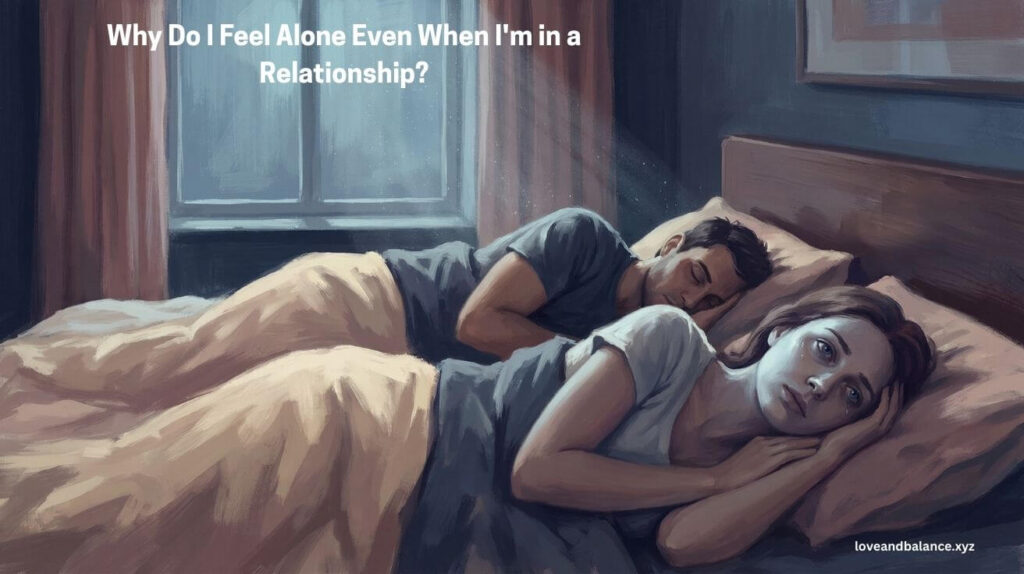
There is a specific kind of pain that no one really warns you about — the kind where you are lying next to someone who loves you, and you still feel completely invisible. You are not single. You are not unloved. But somewhere between the shared meals, the text messages, and the goodnight kisses, something feels hollow. You feel alone even when you are in a relationship — and the worst part? You feel guilty for feeling it.
I want you to know this: what you are experiencing is not a personal failure, and you are not broken. It is one of the most common yet quiet emotional experiences in modern relationships. And there is science, and real human experience, to back that up.
Let me walk you through why it happens, what the research actually says, and — most importantly — what you can do about it.
It Has a Name: Relational Loneliness
Psychologists distinguish between social loneliness (the absence of people in your life) and emotional loneliness (the absence of a deep, felt connection — even when people are physically present). Being in a relationship does not protect you from the second kind.
A 2024 study published in a peer-reviewed journal found that loneliness arises specifically when there is a discrepancy between the connection you desire and the connection you actually experience — and that people who feel lonely within romantic relationships report significantly lower relationship satisfaction, commitment, and trust. In other words, the gap between what you need emotionally and what you are receiving is what creates that aching hollow feeling.
This is not about loving each other less. It is about emotional attunement — whether your partner truly sees you, hears you, and meets you in the way you need to be met.
The Neuroscience Behind Feeling “Alone Together”
Your nervous system is always scanning for signals of safety and connection. When those signals are absent or inconsistent — even from someone you love — your brain registers it as a threat. Dr. Trish Leigh, a neuroscience-based relationship researcher, describes this as the “Alone Together” phenomenon: your nervous system does not feel met by your partner, so it triggers a loneliness response regardless of their physical presence.
Think of it this way: if your partner is physically in the room but emotionally unavailable — scrolling their phone, dismissing your feelings, or giving you one-word answers when you need a real conversation — your nervous system does not experience connection. It experiences absence. And absence, even in company, registers as loneliness.
7 Real Reasons You Feel Alone in Your Relationship
1. Emotional Needs Are Going Unmet
This is the most common root cause. Emotional connection is not just about time together — it is about feeling understood, valued, and genuinely seen. When those deeper needs go unfulfilled, isolation can creep in even when the relationship looks perfectly fine from the outside.
Ask yourself honestly: Does your partner know what you are afraid of right now? Do they know what has been weighing on your mind this week? If the answer is no — not because you hid it, but because they didn’t ask or didn’t engage — that is an emotional gap.
2. Your Attachment Style Is Working Against You
One of the most revealing things research tells us about relationship loneliness is how deeply it connects to attachment styles — the emotional blueprints we develop in childhood based on how our early caregivers responded to our needs.
A study examining adult attachment styles and loneliness found that individuals with anxious attachment reported the highest levels of loneliness in romantic relationships, while those with secure attachment reported the lowest. People with anxious attachment tend to crave closeness intensely, yet chronically fear it will be taken away — creating a painful cycle of reaching for connection and then bracing for disappointment.
If you grew up in a home where love felt conditional or inconsistent, you may have been trained to feel alone even when love is present, because part of you is always waiting for it to disappear.
3. Communication Has Become Surface-Level
The Gottman Institute — one of the world’s most respected relationship research centres — identifies surface-level communication as a primary warning sign of relational loneliness. When conversations are limited to logistics (“What’s for dinner?” “Did you pay the bill?”) and there is no space for vulnerability, feelings, or honest emotional check-ins, the relationship starts to feel like a business arrangement.
Deep loneliness does not always come from conflict. Sometimes it comes from the quiet — from a thousand ordinary conversations where nothing real was ever said.
4. Stonewalling and Emotional Withdrawal
A 2025 study on emotional loneliness in couples found that stonewalling — where one partner shuts down, goes silent, or withdraws during conflict — is significantly associated with emotional loneliness and even reduced intimacy. Emotional loneliness was found to be a mediating factor between stonewalling and sexual and emotional disengagement (β = 0.28, p < .001), meaning the more one partner stonewalls, the lonelier the other partner feels — and the more disconnected the relationship becomes overall.
This matters because stonewalling is often a defence mechanism, not a deliberate act of cruelty. One partner shuts down to self-protect; the other partner interprets silence as rejection. Both end up alone.
5. Life Transitions That Shift Your World
Sometimes loneliness in a relationship is not born from dysfunction at all — it comes from major life changes that quietly reshape who you are. A new job, a pregnancy, a loss, a move to a new city — these transitions shift your internal world significantly. If your partner is not part of that shift, or if they are navigating their own transition separately, emotional distance can grow without either of you noticing.
I have heard from many readers of this blog who described feeling most alone in their relationship after a life milestone — a promotion, a miscarriage, a parent’s illness — not because their partner stopped caring, but because neither of them knew how to navigate the new emotional terrain together.
6. You Are Outsourcing Your Emotional Validation
This one is harder to talk about, but it deserves honesty. Sometimes the loneliness you feel in your relationship is partly about the gap between who you are becoming and who you were when the relationship began. If you have grown, evolved, or changed — in your values, your ambitions, your emotional awareness — and your relationship has not grown with you, you may feel unseen not because your partner is neglectful, but because the version of you they know is no longer the full picture.
This is not a reason to leave. It is a reason to reintroduce yourself to each other — deliberately and consistently.
7. Unresolved Conflict That Was Never Really Resolved
Research from the 2024 loneliness-relationship study found that loneliness was associated with less relationship awareness, and this reduced attentiveness was linked to more conflict and less trust. When conflicts go unresolved or are swept under the rug, a residue of emotional distance settles between two people. You stop trusting your partner with vulnerable feelings because the last time you shared them, it did not go well — and so you close off, and so does the connection.
The Loneliness Loop: How It Sustains Itself
Here is something important that most people do not realise: relational loneliness feeds itself. The research on psychological inflexibility — the tendency to avoid uncomfortable emotional experiences — shows that loneliness deepens relationship conflict and erodes trust in a self-reinforcing loop.
When you feel alone, you pull back. When you pull back, your partner senses the distance and either pulls back too (avoidant style) or becomes anxious and clingy (anxious style). Neither response creates the safety needed for real reconnection. The loop continues until someone consciously decides to break it.
That someone can be you.
What You Can Actually Do About It
Start With Self-Awareness, Not Blame
Before pointing fingers, ask: What do I actually need that I am not receiving? Loneliness often becomes a story about what our partner is doing wrong. But the more useful question is: what emotional need is not being met, and have I communicated it clearly?
The Gottman Institute recommends weekly relationship check-ins — a dedicated 30-minute conversation where both partners share what has been on their mind, what they have appreciated, and what they have needed more of. Simple, but transformative.
Rebuild Emotional Intimacy Deliberately
Emotional intimacy does not restore itself automatically. It requires daily rituals of connection — small, consistent moments where you turn toward each other instead of away. This could be a ten-minute phone-free conversation before bed, a question you ask each other every day, or a shared ritual that is just yours.
One practice I recommend to readers: the 36 Questions exercise developed by psychologist Dr. Arthur Aron, designed to create closeness through progressively deeper vulnerability. It sounds clinical. It works.
Use “I Feel” Language, Not Accusation
When you tell your partner, “You never listen to me,” they get defensive. When you say, “I have been feeling really invisible lately and I miss feeling close to you,” you open a door. The difference between these two statements is not politeness — it is the difference between a fight and a conversation.
Consider Couples Therapy Before It Becomes a Crisis
Therapy is not a last resort. It is a tool, and it works best before a relationship reaches a crisis point. A skilled therapist can help both partners identify unspoken emotional patterns, unmet needs, and communication breakdowns that feel impossible to untangle alone.
Examine Your Attachment Wounds
If you notice that you chronically feel alone in relationships — across multiple partners, across different life stages — this is worth exploring with an individual therapist. The loneliness may not be about your partner at all. It may be an old wound from childhood, asking to finally be addressed.
A Note on When to Be Concerned
There is a difference between relational loneliness that can be healed with effort and communication, and loneliness that is a signal of something more serious — emotional neglect, dismissiveness, contempt, or even emotional abuse. If your partner consistently invalidates your feelings, mocks your emotions, or makes you feel that your emotional needs are a burden, that is not a communication problem. That is a safety problem. Please trust your gut and reach out to a counsellor or a trusted person in your life.
Why Do I Feel Alone Even When I’m in a Relationship?
Frequently Asked Questions
Q: Is it normal to feel lonely in a healthy relationship?
Yes. Feeling lonely at times does not mean your relationship is failing. It often means there is an emotional gap that has grown without either partner noticing. The key is recognising it early and addressing it with honest conversation rather than silence.
Q: Does feeling alone in a relationship mean I should break up?
Not necessarily. Loneliness in a relationship is often a symptom of an unmet need or a communication breakdown, not a sign of incompatibility. Before making any major decision, try expressing your needs clearly and giving the relationship a genuine effort to reconnect.
Q: Can anxiety cause me to feel lonely in a relationship?
Absolutely. Anxiety — especially attachment anxiety — can make you feel profoundly alone even when your partner is emotionally present. Anxious attachment styles are strongly correlated with higher levels of loneliness in romantic relationships, according to recent research. Therapy and self-awareness work can help break this cycle.
Q: What if my partner doesn’t understand why I feel alone?
This is common. Many partners genuinely do not realise their behaviour is creating distance. Use specific, non-blaming language to describe what you are feeling and what you need — not what they are doing wrong. If conversations repeatedly go nowhere, a couples therapist can act as a neutral guide.
Q: How long does it take to feel reconnected with a partner?
It varies, but research and clinical experience suggest that consistent small efforts — daily check-ins, open conversations, physical affection, shared rituals — can create a noticeable shift within a few weeks. Deep reconnection after prolonged distance may take months of intentional effort.
Q: Can feeling alone in a relationship affect mental health?
Yes, significantly. Emotional loneliness within romantic relationships is associated with increased psychological distress, reduced sexual intimacy, and lower overall life satisfaction. Chronic relational loneliness can contribute to depression and anxiety if left unaddressed.
Q: What is the difference between being alone and feeling lonely in a relationship?
Being alone is a physical state. Feeling lonely is an emotional state. You can feel completely held and seen while sitting alone, and you can feel utterly invisible while sharing a bed with someone. Relational loneliness is specifically about the absence of felt emotional connection, regardless of physical proximity.
Final Thought
Feeling alone in a relationship is not a verdict on your love. It is a signal. It is your emotional self raising a hand and saying, “I need more. I need to feel truly seen.”
The bravest thing you can do is not leave — it is to stay and say it out loud. To your partner. To yourself. Because connection is always possible on the other side of honest vulnerability.
And you deserve to feel genuinely met by the person you love.
If this post resonated with you, share it with someone who needs to read it. You can also explore more on attachment styles and emotional intimacy in the Love and Balance blog — because understanding your relationship patterns is the first step to changing them.
Author’s note: The experiences shared in this post are drawn from years of writing about relationship psychology, reader conversations, and peer-reviewed research in the field of relational wellness. If you are experiencing emotional distress in your relationship, please consider speaking with a licensed therapist.